
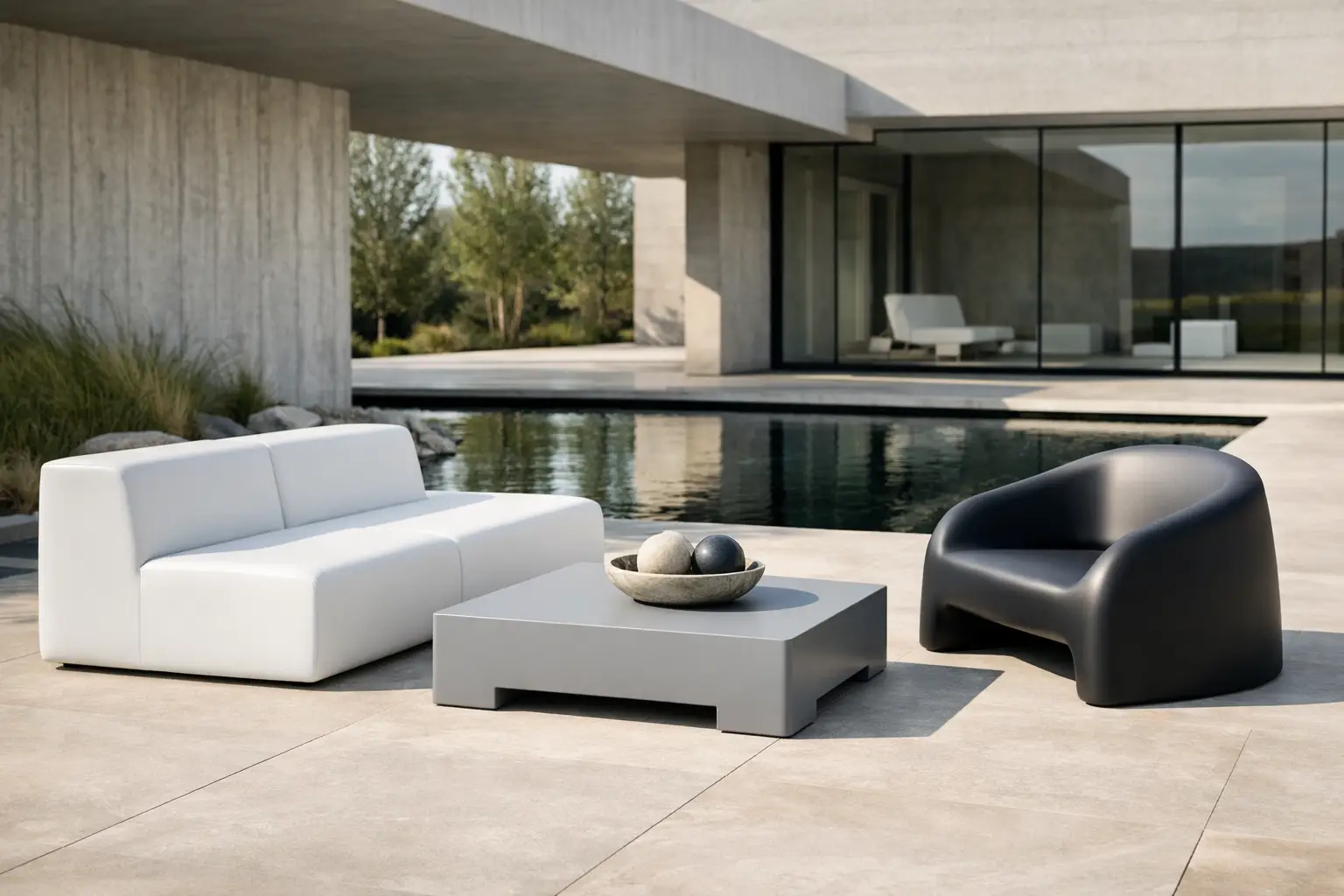
A guide to outdoor coated furniture should begin with more than a color chip or a catalog image. In hospitality terraces, campus courtyards, retail forecourts, and public landscapes, furniture has to perform under sunlight, rain, traffic, cleaning routines, and constant visual scrutiny. The right coated piece can make a space feel unmistakably intentional. The wrong specification can leave a once-bold concept looking tired long before the project reaches its potential.
Outdoor coated furniture gives architects and designers an unusual degree of freedom. It allows seating, loungers, benches, poufs, and planters to move beyond conventional frames and upholstery into softer, more sculptural forms. But freedom in form demands precision in specification. The coating, the substrate, the intended use, the climate, and the maintenance plan all need to work together.
What Outdoor Coated Furniture Is Designed to Do
Coated furniture uses a protective finish over a formed substrate, often foam, to create a continuous, tactile surface without the seams, cushions, and exposed frameworks associated with traditional outdoor furniture. This approach makes it possible to produce fluid geometries, rounded volumes, oversized objects, and branded forms that would be difficult or impractical to achieve with rigid shell construction.
For design-led exterior environments, the value is not simply visual. A continuous coated surface can reduce the number of places where water, debris, and dirt collect. It can also support a clearer material language across furniture and landscape elements, allowing a project to carry one color, silhouette, or signature shape from a lounge zone to a planter line or informal meeting area.
That does not mean every coated object is interchangeable. Outdoor performance depends on the particular coating system and the way it has been engineered for exposure. A sheltered rooftop lounge, an open pool deck, and a busy public plaza place very different demands on the same object.
Start With the Site, Not the Shape
The most successful specifications begin with an honest reading of the environment. Before selecting a form or finish, identify how the furniture will live outdoors.
Sun exposure is often the first concern. Direct, sustained UV exposure can affect color appearance and surface condition over time, especially with saturated hues and dark tones that absorb more heat. If a project requires intense color, ask for a finish developed for exterior use and review how the chosen shade is expected to age in its specific setting. A vivid orange bench beside a shaded hotel garden may face a very different lifespan than the same bench on an unshaded coastal terrace.
Water is the next consideration. Furniture used around pools, fountains, or exposed dining terraces should be specified with drainage and drying in mind. While a coated surface can simplify cleanup, standing water should not become part of normal use. Consider the floor pitch, the location of irrigation heads, and whether furniture will sit directly beneath roof runoff.
Climate matters just as much. Freeze-thaw cycles, high humidity, salt air, extreme heat, and wind-driven grit each create their own forms of wear. There is no universal outdoor rating that replaces project-specific judgment. Share the site conditions early with the manufacturer, particularly for large custom pieces that will be difficult to move once installed.
Specify the Coating as a Performance Layer
A coating is not a cosmetic afterthought. It is the working surface that users see, touch, clean, and test every day. Its texture influences the furniture’s visual character, while its formulation and application influence how well it meets the realities of the site.
For commercial projects, ask practical questions during specification: Is the finish intended for exterior exposure? How should it be cleaned? What level of abrasion, staining, or impact is anticipated? Can the piece be repaired if it is damaged? Are there limitations around prolonged water exposure, sharp objects, or heat buildup?
Texture deserves attention as well. A fine, matte surface may reinforce a refined architectural scheme, while a more tactile finish can make informal seating feel approachable and grounded. Yet deeply textured surfaces can retain more dust in dry landscapes, and very smooth, dark finishes may show scuffs more visibly in high-touch settings. The best finish is rarely the one that looks perfect only in a sample box. It is the one that supports the intended atmosphere after months of real use.
Color should be evaluated at scale. Outdoor light is unforgiving and constantly changing. A neutral that appears warm indoors can read cool in open daylight, while an energetic color can become dominant across a full terrace. Request large samples or review comparable installed pieces whenever possible. For custom environments, color can be used with discipline: reserve the strongest tones for focal forms, then anchor the rest of the setting with quieter landscape and architectural materials.
Design for Use, Movement, and Human Behavior
Sculptural furniture earns its place when it works as hard as it looks. Consider who will use it, how long they will stay, and what they are likely to do while seated. A low, relaxed lounge form may be ideal for a poolside setting but unsuitable for an all-day workplace courtyard where users need easier sit-to-stand movement. Generous communal seating can encourage spontaneous gathering, while smaller independent pieces give guests more control over personal space.
Scale is equally important outdoors. Furniture that feels substantial in a showroom can disappear against a broad plaza or oversized façade. Conversely, a large object can obstruct circulation, sightlines, emergency access, or maintenance routes. Map the footprint, not just the silhouette. Include the room needed for chairs to be pulled out, people to pass, doors to open, and staff to clean around the installation.
Weight and mobility are a genuine trade-off. A substantial piece may offer welcome stability in public or windy locations, but it will need a clear installation strategy. Lighter modular forms can make seasonal reconfiguration easier, although they may require additional planning in exposed conditions. If furniture will be moved frequently for events, define that requirement from the start rather than treating it as an operational detail later.
Guide to Outdoor Coated Furniture for Public Projects
In public-facing environments, durability includes more than weather resistance. It includes the ability to tolerate repetitive use, informal misuse, cleaning crews, luggage, shoes, food, and the occasional collision with maintenance equipment. A visually soft object may still need to stand up to hard commercial realities.
Specify edges, corners, and transitions with this in mind. Extremely thin projections and delicate details can be compelling in a controlled installation, but high-traffic settings reward confident geometry. Rounded forms often perform well because they are inviting, visually generous, and less vulnerable to sharp corner damage. This is one reason coated foam fabrication is so effective for lounges, play-adjacent spaces, casual social areas, and branded environments.
Accessibility should also be part of the design conversation. Provide varied seat heights, clear circulation routes, and options that support different bodies and mobility needs. A single sculptural seating landscape can be memorable, but it should not force every visitor into the same posture or mode of use.
For custom work, involve the fabricator while the concept is still flexible. Sixinch works from the premise that bold ideas deserve production intelligence early, when proportions, joins, surfaces, and installation conditions can be resolved without compromising the original design intent. The strongest custom pieces are not drawings translated literally into objects. They are concepts refined through material expertise.
Build a Maintenance Plan Into the Specification
Outdoor furniture should come with a care strategy before it reaches the site. This is especially true for hospitality, retail, and public projects, where a small amount of regular attention protects a much larger visual investment.
Routine cleaning should be simple enough for the operations team to perform consistently. In most cases, this means removing loose debris and using mild, approved cleaning methods rather than abrasive pads, aggressive solvents, or improvised chemical products. Confirm the recommended cleaning protocol for the exact finish, and provide it to the people responsible for day-to-day care.
Inspection is equally valuable. Teams should periodically check for surface cuts, impact marks, standing-water issues, and movement caused by uneven paving or repeated relocation. Addressing a small area of damage early is generally easier and more discreet than waiting until moisture, dirt, or continued use worsens it.
Seasonal storage can extend the appearance of movable pieces in regions with severe winters or long periods of harsh weather. Fixed furniture, meanwhile, benefits from careful placement and durable site detailing. No cleaning program can compensate for a bench installed where irrigation strikes it daily or a planter positioned in an area that floods after every storm.
Let the Object Carry the Concept
Outdoor coated furniture is most compelling when it does not imitate indoor upholstery or conventional patio sets. Let it be what it is: a highly formed, durable design element with the ability to define a space through color, volume, and unexpected geometry.
Whether the brief calls for a quiet garden lounge or an unmistakable social landmark, specify the piece with the same rigor applied to architecture and landscape. The reward is furniture that remains more than an accessory to the project. It becomes one of the reasons people remember being there.