
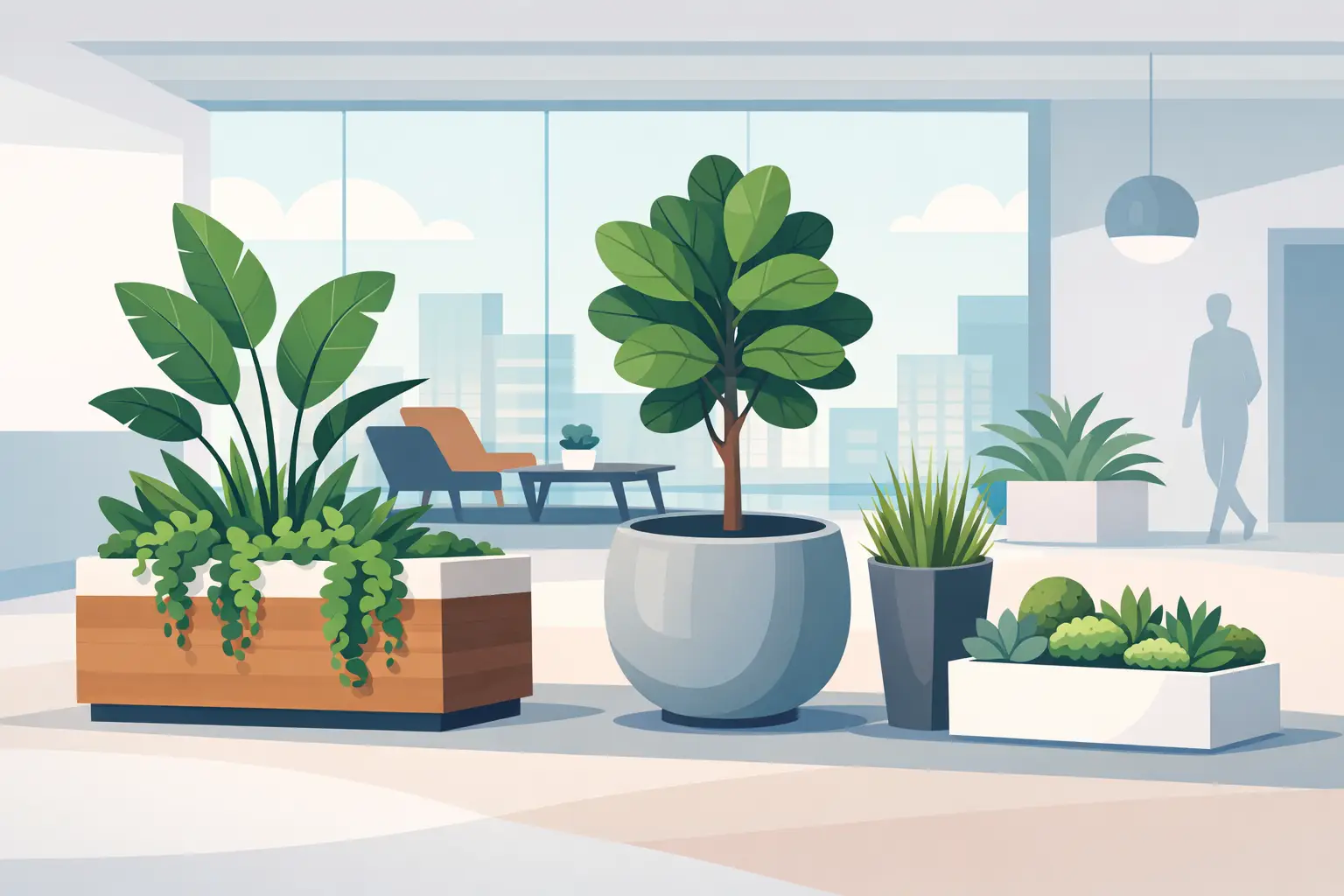
A planter can do much more than hold greenery. In a commercial setting, it can direct circulation, soften acoustics, frame a brand moment, create privacy, and anchor the architecture with a sculptural presence. That is why custom planters for commercial spaces have become a specification tool, not an afterthought.
For architects, interior designers, and landscape professionals, the real question is rarely whether to use planters. It is how to make them work harder. Standard off-the-shelf shapes may fill a gap, but they often miss the bigger opportunity to integrate planting into the design language of the project itself. When a planter is custom, it can align with the geometry of a lobby, reinforce the identity of a retail concept, or solve a tricky spatial condition that standard products simply cannot address.
Why custom planters for commercial spaces matter
In hospitality, workplace, retail, and public environments, every object is doing visual and functional work. A planter sits at the intersection of both. It is part furniture, part architectural element, and part landscape strategy. When treated that way, it contributes to the experience of the space rather than reading as decor dropped in late.
This matters most in projects where atmosphere carries business value. A hotel lounge needs a sense of intimacy without building hard partitions. A retail store may want to guide movement while keeping the floor open and inviting. A corporate commons might need to carve out zones for focus and informal meeting without adding visual weight. Custom planters can solve these problems while keeping the environment fresh, tactile, and distinctly branded.
There is also a practical side. Commercial spaces deal with heavier traffic, stricter maintenance demands, and more scrutiny from clients and facilities teams. A planter specified for these environments has to do more than look good on opening day. It should fit the operational reality of the site, from cleaning routines to irrigation planning to the way users interact with the object over time.
The design value goes beyond shape
Shape is often the first reason specifiers consider custom work, and for good reason. Bespoke dimensions allow a planter to run continuously along banquettes, wrap a column, define an outdoor terrace edge, or create a freestanding island that feels fully integrated with the rest of the interior. But geometry is only one layer.
Material expression matters just as much. The finish, edge condition, scale, and color all influence whether a planter reads as quiet infrastructure or a statement piece. In some projects, the right move is restraint – a clean monolithic form that lets the planting do the talking. In others, the planter itself becomes part of the visual identity, using bold volume, saturated color, or soft sculptural contours to establish character.
That flexibility is especially valuable when a project needs consistency across different zones. The same planter family can be scaled and adapted for entry sequences, lounges, breakout areas, terraces, and public circulation zones while maintaining one design language. The result feels intentional, not pieced together.
Branding, zoning, and atmosphere
The strongest commercial interiors are legible at a glance. People understand where to pause, where to move, and what kind of experience a space is offering. Custom planters support that clarity.
They can create thresholds without walls, define seating clusters without clutter, and introduce biophilic elements in a way that feels designed rather than decorative. In branded environments, they also offer an opportunity to echo the curves, colors, and material cues used elsewhere in the concept. That does not mean turning every planter into a logo. It means building continuity between architecture, furniture, and landscape.
For experiential retail and hospitality, this can be a major advantage. Guests may not consciously analyze why a space feels composed, but they notice when every element belongs.
What to specify before design intent gets lost
A custom planter succeeds when the fabrication logic supports the concept rather than limiting it. Early specification decisions shape that outcome.
The first is use case. Indoor and outdoor installations place very different demands on a planter. UV exposure, standing water, drainage strategy, and temperature swings all affect what is realistic. A dramatic form may be possible in both settings, but the construction details should respond to where and how the piece will live.
The second is planting strategy. Designers sometimes finalize planter forms before involving the landscape or horticultural side of the project, which can create tension later. Root depth, soil volume, access for maintenance, irrigation integration, and liner requirements all influence the internal build. A custom exterior does not remove those requirements. It has to accommodate them intelligently.
The third is human interaction. In commercial spaces, planters are leaned on, sat on, bumped by luggage, brushed by carts, and cleaned frequently. That changes what edge details, finishes, and structural solutions make sense. A pristine detail on paper may need adjustment if the planter is going into a high-contact airport lounge or a busy hotel entrance.
Scale and proportion in large environments
Commercial projects often fail with planters for a simple reason: the pieces are too small for the architecture around them. In a double-height atrium or an expansive terrace, underscaled planters look temporary, even if they are expensive. Customization allows the proportions to match the spatial ambition.
That does not always mean going bigger. Sometimes it means going longer, lower, softer, or more architectural. A series of low linear planters may support sightlines better than a cluster of tall vessels. A curved volume can relax a rigid floor plan. A built-in planter edge can double as an informal perch. The right answer depends on circulation, program, and visual rhythm.
Material performance is part of the aesthetic
In commercial work, beauty without durability becomes a liability. The finish has to hold up under actual use, not just photography. That is why material selection should be treated as part of the design concept from the start.
For many projects, the ideal planter material is one that offers formal freedom without sacrificing cleanability and resilience. Coated fabrication methods can be especially compelling here because they allow smooth, expressive shapes with a continuous finish and a distinct visual presence. They also support a level of customization that rigid standard manufacturing often cannot match.
This is where a fabrication partner earns trust. It is not enough to say a planter can be made in a custom size or color. The manufacturer should be able to advise on wall thickness, installation method, drainage detailing, finish behavior, and the trade-offs between visual purity and serviceability. Sometimes the sleekest solution is right. Sometimes a subtle design adjustment will protect the piece and extend its life.
That technical dialogue is what turns a bold concept into a buildable product.
Custom planters for commercial spaces in real project types
Different sectors ask different things of a planter. In hospitality, the priority is often atmosphere. Designers want planting to soften the room and add depth, but they also need durable objects that can tolerate frequent cleaning and heavy guest traffic. Here, custom planters often work best when they integrate with seating, divide lounge zones, or create layered arrival moments.
In workplace environments, flexibility tends to matter more. Planters may need to support evolving layouts, define collaborative areas, or add softness to open spaces without reducing transparency. Long modular forms and mobile solutions can both be useful, depending on whether the client values permanence or adaptation.
Retail asks for another balance. Visual identity is usually non-negotiable, and every element competes for attention. A custom planter can become part of the merchandising architecture, especially when it picks up the same formal language as display furniture, cash wraps, or feature walls.
Public and civic environments raise the durability threshold again. These spaces demand clear maintenance planning, strong material performance, and forms that remain compelling at scale. A successful planter in this context must feel substantial enough to belong.
When custom is worth it – and when it is not
Custom work is not automatically the right answer for every project. If the planter is filling a minor support role in a back-of-house or low-visibility area, standard products may be perfectly sufficient. Not every condition needs a bespoke response.
But in high-impact zones, signature environments, awkward footprints, or projects where brand expression is central, custom is usually worth the investment. It gives the design team control over proportion, finish, and integration. It also avoids the familiar compromise of choosing a standard planter that is almost right but never fully convincing.
The best custom planters do not announce themselves as custom for the sake of it. They simply feel inevitable, as if the space was always meant to include them.
For design-led commercial interiors and landscapes, that is the real value. A planter should not sit outside the concept. It should strengthen it, absorb practical demands, and make the project feel more resolved. When that happens, greenery stops being an accessory and becomes part of the architecture itself.
If you are specifying with that level of intent, the planter is no longer a container. It is a design instrument.
1 comment