
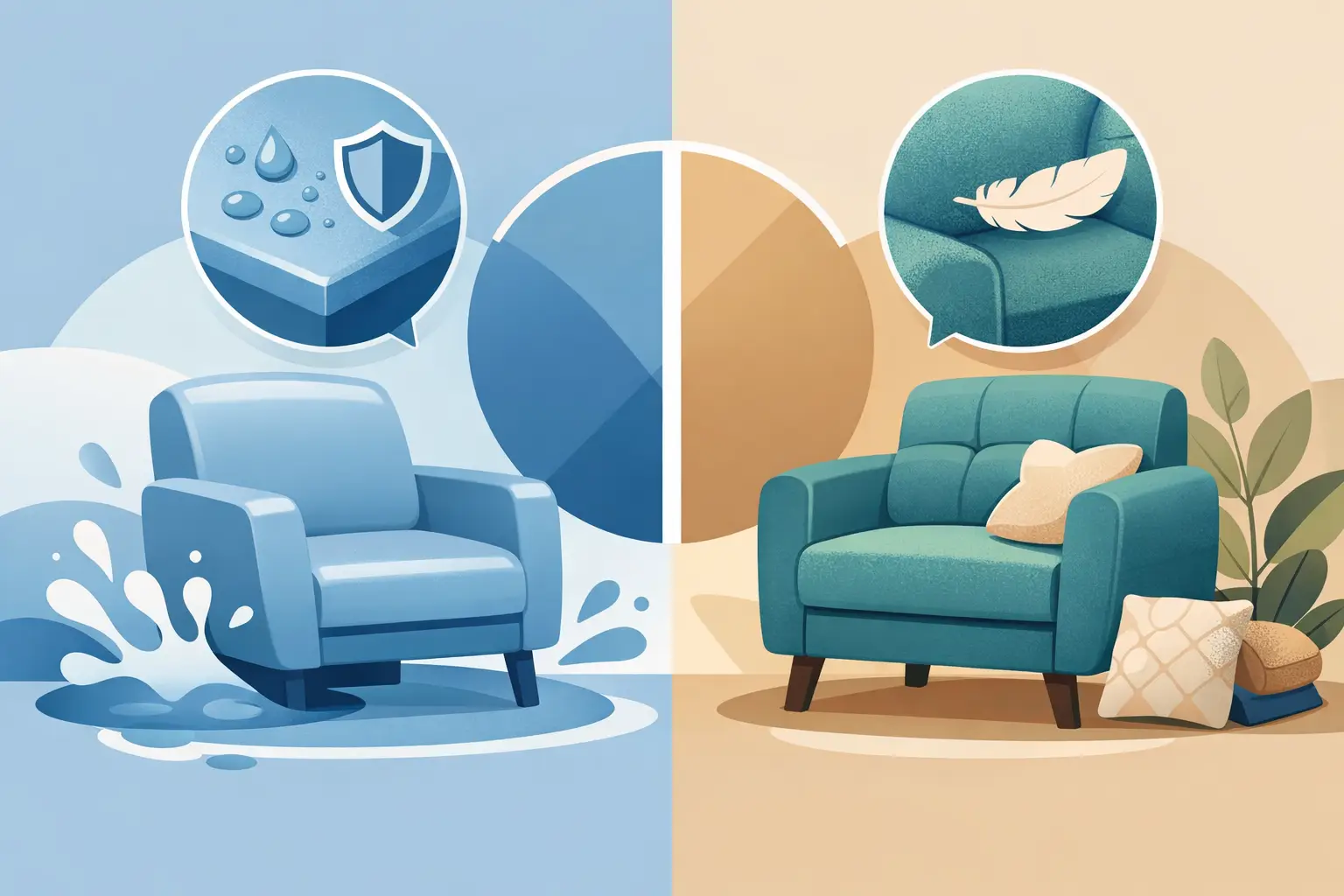
A curved bench that looks effortless on paper can become a compromise the moment material reality enters the room. That is where the coated foam vs upholstery question stops being cosmetic and starts shaping the entire project. For architects, interior designers, and specifiers, the choice affects not just comfort, but geometry, detailing, maintenance, longevity, and how boldly a concept can be executed.
This is not a matter of one material being universally better. It is a matter of fit. Upholstery remains a strong solution for many seating applications, especially when softness, tailoring, and familiar residential cues are part of the brief. Coated foam, on the other hand, opens a different design language – one built around sculptural freedom, visual clarity, and a finish that feels more integrated with the form itself.
Coated foam vs upholstery in design intent
The fastest way to compare these two approaches is to ask what the object is supposed to communicate.
Traditional upholstery often emphasizes layers. There is an inner structure, padding, and then a textile or leather skin wrapped over the form. That construction brings warmth and softness, but it also comes with visible seams, pull lines, fabric behavior, and the practical limits of what can be stretched or tailored over shape.
Coated foam works differently. The coating becomes part of the object’s expression, creating a continuous outer surface over shaped foam. That changes the visual result immediately. Instead of reading as a frame dressed in fabric, the piece reads as a complete volume – clean, monolithic, and more architectural.
For design-led commercial spaces, that distinction matters. In a hospitality lounge, branded environment, museum, education setting, or public waiting area, furniture often needs to do more than fill a floor plan. It may need to reinforce identity, guide movement, or create a memorable focal point. Coated foam is particularly effective when the seating itself is part of the spatial concept rather than a separate decorative layer.
Form freedom is where coated foam pulls ahead
When designers push beyond straight banquettes and standard lounge chairs, upholstery starts to show its limits. Tight radii, exaggerated curves, compound geometries, and seamless sculptural transitions are all possible with upholstered construction, but they become more labor-intensive and more dependent on patterning, stitching, and hidden support solutions.
Coated foam simplifies that challenge because the form is not fighting a textile skin. Organic silhouettes, soft-edged blocks, oversized geometry, playful monoliths, and custom profiles become far easier to execute with precision. If the project calls for seating that looks carved rather than assembled, coated foam is usually the more natural path.
This is one reason design teams use it for statement benches, hospitality islands, landscape elements, kid-focused environments, retail installations, and branded objects that need to feel custom from every angle. The shape can stay pure. The concept does not need to be redrawn to satisfy fabric behavior.
Surface character and tactile experience
The conversation around coated foam vs upholstery often gets reduced to appearance, but touch matters just as much.
Upholstery has a familiar softness because fabric and leather bring their own texture, warmth, and visual depth. In settings where tactile richness and domestic comfort are central, that can be exactly right. Textile also offers an enormous vocabulary of weave, pile, pattern, and hand.
Coated foam delivers a different tactile experience. Its surface is smoother, more controlled, and more graphic. It tends to suit projects where visual discipline matters as much as comfort – spaces that benefit from a crisp silhouette, saturated color, and a finish that reads as intentional rather than decorative. The result feels contemporary and confident, especially in interiors that lean architectural or brand-driven.
Neither is inherently more comfortable. Comfort comes from proportion, density, support, and intended use. What changes is the sensory message. Upholstery tends to feel layered and soft in a familiar way. Coated foam feels integrated, clean, and purpose-built.
Durability depends on the kind of wear
Durability is never a one-word answer because furniture fails in different ways.
Upholstery can perform extremely well, but its outer layer remains vulnerable to snagging, staining, seam stress, and abrasion patterns. In heavy-traffic commercial environments, these issues are not theoretical. They become visible first at corners, edges, and high-contact zones. Maintenance teams may also face the challenge of cleaning textured fabric or managing wear inconsistency across a large installation.
Coated foam offers a strong advantage when the project needs a resilient, easy-to-maintain surface with fewer detailing vulnerabilities. Because there are no fabric seams to split and no woven surfaces to trap debris in the same way, the furniture often holds a cleaner visual line over time. That makes it especially compelling for public spaces, circulation zones, educational settings, and hospitality projects where appearance has to stay sharp under repeated use.
That said, durability still depends on correct specification. Exposure, usage intensity, cleaning regime, and indoor or outdoor conditions all matter. A well-made upholstered piece can last beautifully in the right context. A coated foam element can outperform in conditions where easy upkeep and visual consistency are priorities. The better choice comes from understanding how the piece will actually live, not just how it will be photographed.
Maintenance and operational reality
Design decisions are often made in concept meetings and judged later by operations teams. That is why maintenance deserves more attention than it usually gets.
Upholstery can require more involved care. Fabric selection, stain resistance, removable covers, and cleaning protocols all need to be considered early. In boutique settings with dedicated upkeep, that may be manageable. In high-volume environments, it can become a weak point.
Coated foam is often specified because the maintenance story is simpler. The continuous surface is easier to wipe down, easier to keep visually consistent, and less likely to show the kind of localized fatigue that makes a space look tired before its time. For healthcare-adjacent spaces, family environments, hospitality, and branded commercial interiors, that practical advantage can be decisive.
It also affects replacement cycles. If a piece is custom-shaped and central to the concept, replacing worn upholstery years later can be more disruptive than specifiers expect. A more integrated finish can help protect the integrity of the original design over a longer period.
Where upholstery still wins
There are projects where upholstery remains the better answer, and pretending otherwise would miss the point.
If the brief calls for a deeply residential atmosphere, layered materiality, acoustic softness, or a very specific textile story, upholstery offers nuance that coating does not aim to replicate. It also works well for typologies where cushions, tailored detailing, and a plush lounge feel are essential to the experience.
It may also be the more suitable route when the form itself is relatively conventional and the design interest comes from fabric, stitching, or contrast detailing rather than silhouette. In those cases, upholstery is not a compromise. It is the design feature.
The key is not to specify upholstery by habit. It should be chosen because the project benefits from what upholstery uniquely does.
Coated foam vs upholstery for custom projects
Custom work is where the difference becomes most obvious. Once branding, unusual geometry, circulation logic, and multi-use programming enter the picture, material choice starts influencing what is even feasible.
With upholstered furniture, custom often means adapting known construction methods around a new shape. That can work, but it may require hidden structure, segmented forms, additional seams, or modifications that soften the original concept.
With coated foam, custom can feel more direct. Designers can think in volumes, curves, clusters, and integrated elements without relying on textile construction to resolve the geometry. That freedom is why brands like Sixinch are often brought in when a project demands furniture that acts like spatial design – not just seating placed within it.
For specifiers, this also changes the conversation with clients. Instead of asking which standard product comes closest, you can ask what the space actually needs and develop from there.
How to choose with more precision
The smartest way to decide is to align the material with the role of the piece.
If the furniture needs to be sculptural, highly customized, easy to maintain, visually bold, and consistent across heavy use, coated foam is usually the stronger specification. If it needs a softer residential language, textile-driven character, or classic lounge sensibility, upholstery may serve the concept better.
Budget, timeline, environment, and user behavior should all be part of the discussion, but they should not lead it blindly. A cheaper short-term decision can undermine the visual ambition of a space or create avoidable maintenance issues later. Material choice is part of design strategy, not just procurement.
The most compelling spaces rarely come from default choices. They come from choosing a material that lets the idea stay intact from sketch to final install.