
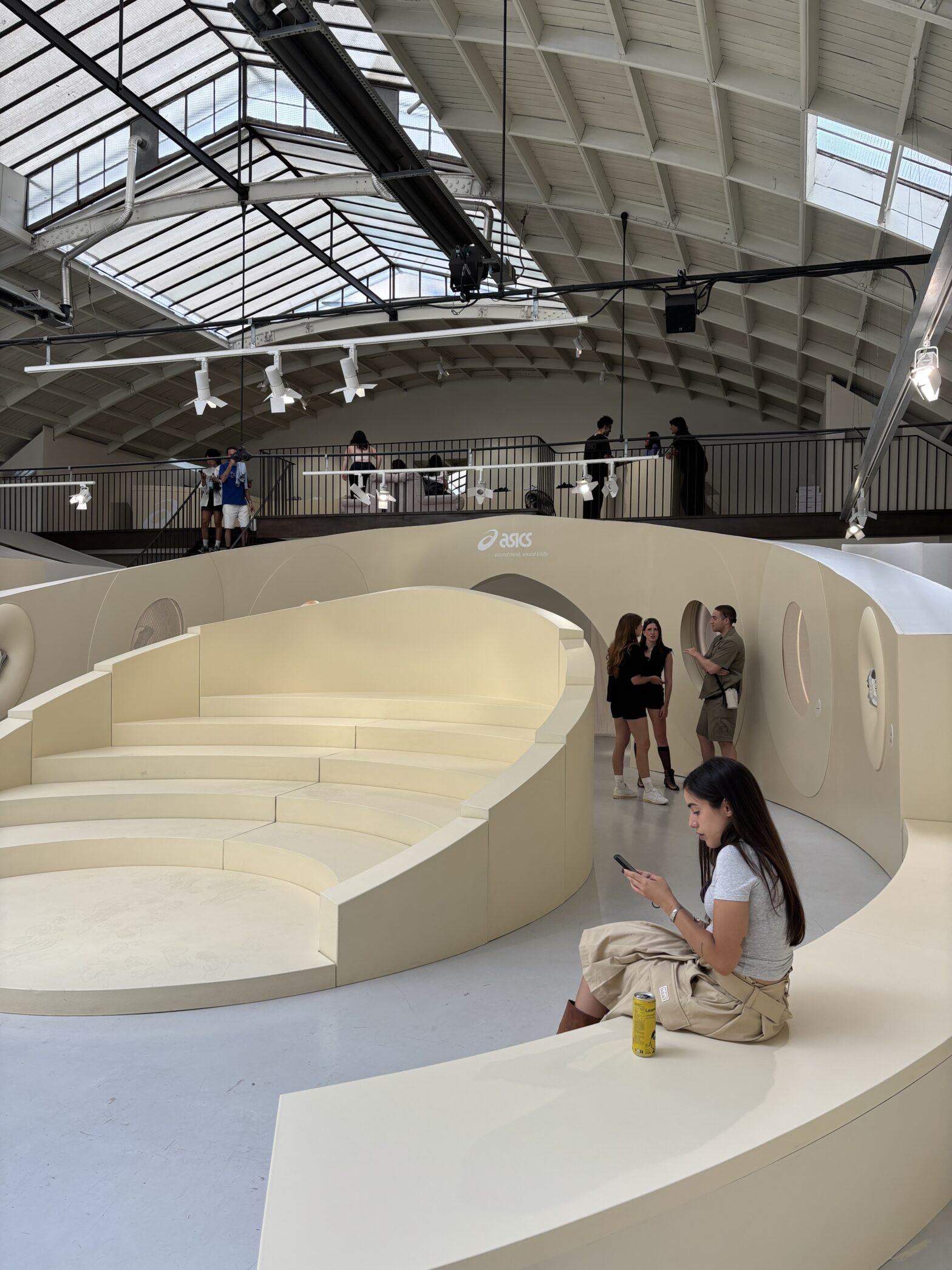
A standard sofa can fill a floor plan. It rarely defines a space. The best custom furniture ideas do more than solve seating counts or circulation diagrams – they give a project its visual signature, reinforce brand identity, and make people remember where they were.
For architects, interior designers, and specifiers working on hospitality, retail, workplace, and public environments, custom furniture is not just decoration. It is a design tool. The shape of a bench can direct movement. The radius of a lounge element can soften a hard architectural shell. A monolithic planter-seat can turn an empty transition zone into a place people actually use.
What makes custom work successful is not novelty for its own sake. It is the alignment of form, function, fabrication, and finish. Ambitious concepts need to be buildable, durable, and consistent at project scale. That is where good ideas become production-ready objects rather than one-off sketches.
Custom furniture ideas that change the room
The strongest custom pieces usually start with a spatial problem or a brand objective, not a mood board alone. When furniture is developed as part of the architecture, it can create a much stronger result than selecting loose pieces after the fact.
Sculptural seating islands
In open lobbies, large lounges, and public atriums, a cluster of separate chairs often looks temporary. A sculptural seating island creates a more intentional centerpiece. It can be circular, serpentine, asymmetric, or fully site-specific, with integrated backs, varying seat heights, and zones for both short stays and longer dwell time.
This approach works especially well when the furniture needs to organize a large footprint without adding visual clutter. Instead of filling a space with many objects, one bold form can do the work of several. The trade-off is flexibility. A fixed sculptural piece has more architectural impact, but it will not rearrange as easily as modular units.
Built-in benching with softened geometry
Banquettes and perimeter seating are common, but custom versions can do much more than line a wall. Softened corners, sweeping transitions, and wrapped forms can turn built-in seating into a deliberate part of the interior language. In restaurants, workplace hubs, and waiting areas, this can make tight footprints feel more generous.
Soft geometry also matters functionally. Rounded forms improve flow in high-traffic environments and reduce the hard edges that tend to make commercial interiors feel rigid. For designers aiming for warmth without losing precision, custom benching offers a clear opportunity.
Brand-shaped furniture for experiential spaces
Retail environments, pop-ups, showrooms, and branded hospitality spaces often need furniture that carries the identity of the concept itself. That does not always mean putting a logo on a chair. Often, the more sophisticated route is to translate brand language into volume, profile, and color.
A seating element might echo a packaging curve, a product silhouette, or a digital interface shape. A reception object might read as both furniture and brand sculpture. These pieces are most successful when they stay usable. If the visual concept dominates comfort or durability, the result photographs well and performs poorly.
Indoor-outdoor continuity pieces
One of the most useful custom furniture ideas for mixed-use and hospitality projects is designing a family of forms that can move across interior and exterior zones. A bench profile, planter shape, or lounge volume can be adapted so terraces, courtyards, lobbies, and circulation areas feel connected.
This is not simply a stylistic decision. It can help a large property feel coherent, especially when guest experience depends on smooth transitions between spaces. Material performance becomes critical here. UV exposure, moisture, cleaning protocols, and wear patterns all need to be addressed early, or the aesthetic continuity will break down quickly in use.
Where custom furniture earns its keep
Custom work makes the most sense when off-the-shelf products cannot meet the spatial, branding, or performance demands of the project. In a straightforward private office fit-out, standard pieces may be enough. In a public-facing or design-led environment, the calculus changes.
Hospitality projects often benefit first because furniture becomes part of the guest experience. A memorable lounge element in a hotel lobby can establish tone immediately. In restaurants and bars, custom seating can improve capacity planning while strengthening the atmosphere.
Retail is another natural fit. When every square foot contributes to brand perception, custom furniture can act as display, seating, and sculptural identity at once. Public spaces also gain from tailored solutions, especially where durability, safety, and high visibility matter as much as aesthetics.
Designing beyond the usual catalog logic
Catalog products are built for broad application. That is their advantage, and also their limit. Custom furniture allows designers to work from the needs of a specific environment instead.
Use furniture to shape circulation
Furniture can define routes without adding walls or barriers. A curved bench can pull visitors toward a focal point. A low divider-seat can separate quiet and active zones within the same open plan. In education, culture, and workplace settings, this kind of soft spatial guidance is often more elegant than hard partitioning.
The key is proportion. Oversized forms can dominate circulation instead of guiding it, while underscaled pieces disappear. Custom development allows those dimensions to respond precisely to the room.
Turn dead zones into active areas
Corners, landings, wide corridors, and transitional spaces are often left underused because standard furniture does not fit cleanly. A custom piece can convert those awkward areas into lounge moments, waiting points, or informal meeting spots.
This is one of the most practical reasons to customize. It does not have to mean spectacle. Sometimes the smartest intervention is a quiet, perfectly fitted object that makes the architecture work harder.
Build multi-function into one form
Commercial interiors frequently ask one object to do several jobs. Seating may also need to integrate planters, backrests, acoustic value, or visual screening. A reception piece may function as a landmark, queue organizer, and touchpoint for brand recognition.
This is where fabrication expertise matters. Combining uses in one form only works when the object still feels resolved. Too many competing functions can create awkward proportions or compromise comfort. Restraint is often what keeps a custom piece feeling powerful.
Material thinking matters as much as form
A compelling sketch is only the beginning. The best custom furniture ideas hold up because the material strategy is considered from the start.
Coated foam construction opens a different vocabulary than wood, metal, or standard upholstery alone. It allows for continuous curves, monolithic volumes, softened edges, and highly expressive shapes that would be difficult or unnecessarily complex in more conventional fabrication methods. It also supports a cleaner translation from concept to built object when sculptural freedom is central to the design.
That does not mean every concept should become a freeform statement piece. Some projects need a sharper architectural expression. Others need lighter visual mass or a more restrained profile. Material choice should follow the project intent, expected wear, maintenance demands, and installation context.
Durability is part of the design conversation, not a technical footnote. In hospitality and public environments, cleaning frequency, impact resistance, and long-term surface appearance affect whether a custom element remains compelling after thousands of interactions. A beautiful object that degrades quickly is not a successful specification.
How to move from idea to specification
The gap between concept and production is where many custom projects lose momentum. A strong manufacturer-partner helps close that gap by translating design ambition into dimensions, tolerances, finishes, and installation logic.
Early conversations should address more than appearance. Designers should consider how the piece enters the building, whether it needs to be modular for transport, how it interfaces with flooring or walls, and what maintenance teams will need over time. These questions do not reduce creativity. They protect it.
It also helps to know where bespoke value is highest. Not every element in a project needs full customization. Often, the smartest strategy is to focus custom investment on high-visibility anchors such as feature seating, branded focal points, or architecturally integrated benching, then balance those pieces with more standardized supporting elements.
For design teams pursuing expressive forms, a fabrication partner with deep experience in sculptural production can make the difference between a diluted version of the concept and a finished object with real presence. That is why brands such as Sixinch are brought into ambitious commercial and public-space projects where shape, color, performance, and originality all need to land at once.
The best custom furniture ideas start with intent
Custom furniture should not feel custom just because it is unusual. It should feel inevitable, as if the space was always asking for that exact form. When the geometry supports movement, the finish supports use, and the object reinforces the project identity, furniture stops being an accessory and becomes part of the architecture.
That is the opportunity worth chasing: not more furniture, but more specific furniture. The kind that gives a room its edge and earns its place long after the opening photos are taken.