
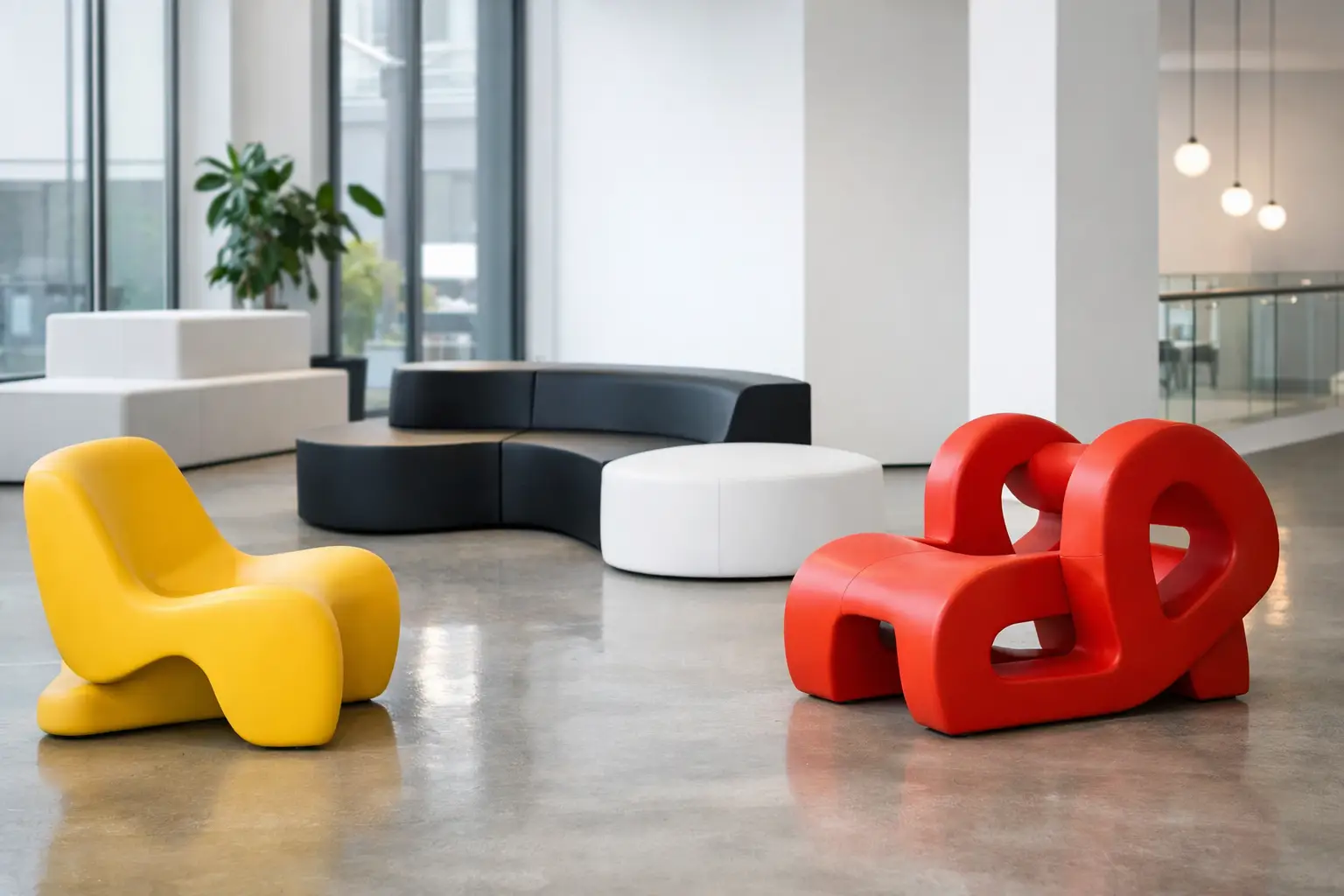
A lobby can say “premium” before a receptionist speaks. A retail floor can feel playful, sharp, calm, or disruptive before a product is touched. That is why designers keep asking, can custom furniture support branding? In the right environment, it does far more than fill square footage. It turns brand strategy into a physical experience people can sit in, move through, photograph, and remember.
For architects, interior designers, and specifiers working on commercial spaces, branded environments are rarely built through graphics alone. Signage, digital media, and finishes matter, but furniture often carries the emotional weight of the room. It controls scale, influences flow, and determines whether a space feels generic or unmistakably tied to the client behind it.
Why custom furniture can support branding so effectively
Branding works when it is consistent, recognizable, and felt across multiple touchpoints. Furniture is one of the few elements in a space that can express all three at once. It is visual, functional, and physical. People do not just look at it. They interact with it.
That matters because branded interiors are judged in seconds. In hospitality, a guest reads the tone of a lounge immediately. In retail, the furniture either reinforces the merchandising concept or weakens it. In workplace and public environments, seating and spatial objects can signal openness, authority, comfort, innovation, or creativity without a single line of copy.
Custom furniture expands what is possible because it is not limited to standard dimensions, predictable silhouettes, or safe neutral palettes. It allows a brand to express itself through form language, proportion, finish, softness, geometry, and even the rhythm of how pieces repeat through a space. When those decisions are made intentionally, furniture becomes part of the identity system.
Branding is not a logo on a chair
There is a common mistake in branded interiors. Clients sometimes assume branding means applying a logo, using corporate colors literally, or specifying obvious custom pieces that announce themselves too loudly. That can work in select experiential settings, but more often it flattens the brand rather than deepening it.
The better question is not whether furniture can display a brand mark. It is whether it can embody the brand’s character.
A technology company may need sculptural seating that suggests innovation and movement. A hospitality brand may want lounge pieces with generous curves and soft tactility to communicate ease and welcome. A retail concept built around energy and youth may call for punchy color blocks and unconventional forms that break the expected floor pattern. In each case, furniture supports branding not because it advertises, but because it behaves like the brand in three dimensions.
That distinction is where custom manufacturing becomes valuable. Design freedom lets teams interpret brand attributes spatially instead of decorating a room with branded symbols.
Can custom furniture support branding in different sectors?
Yes, but the role shifts by project type.
In hospitality, custom furniture often carries the identity of the guest experience. A hotel lounge, rooftop, or waiting area needs more than seating capacity. It needs atmosphere. Custom benches, sofas, planters, or modular elements can create a signature environment guests associate with the property itself.
In retail, furniture can direct movement and frame merchandise while reinforcing the brand’s visual language. The right custom forms can make the environment feel exclusive, playful, experimental, or refined. They can also create stronger moments for social sharing, which has obvious value for brands that rely on visual recognition.
In workplace design, branding tends to be more subtle but no less important. Reception zones, breakout areas, and collaborative spaces often need to reflect the company culture. Custom furniture helps avoid the all-too-common gap between bold brand messaging and bland physical space.
In public and institutional environments, the challenge is different. Branding still matters, but durability, maintenance, and high-traffic performance matter just as much. Here, custom furniture must work hard technically while still expressing identity. That balance is where material expertise becomes critical.
Form, color, and material do the real branding work
When designers ask whether custom furniture can support branding, they are usually asking how deep the customization should go. The answer depends on what the brand needs to communicate.
Form is often the strongest starting point. Sharp angular volumes feel very different from rounded monolithic shapes. Low, expansive seating creates a different mood than upright architectural pieces. Repetition of a distinctive shape across multiple zones can create visual continuity without making the interior feel repetitive.
Color is equally powerful, but it has to be handled with discipline. Pulling a brand palette directly into furniture can be effective, especially in experiential or youth-oriented spaces. Still, not every project benefits from literal translation. Sometimes a single accent tone against quieter architecture creates more impact than flooding the room with primary brand colors.
Material and finish shape perception in a more subtle way. Surface quality influences whether a piece feels technical, soft, playful, polished, or durable. For high-concept commercial projects, coated foam furniture offers unusual freedom here because it allows sculptural forms that would be difficult or inefficient with conventional construction methods. It also creates a continuous visual language across seating, benches, planters, and architectural objects, which is useful when brand consistency needs to extend beyond one furniture category.
The trade-off between originality and practicality
Custom furniture is not automatically the right choice for every branded space. There are trade-offs, and experienced specifiers know this.
The more distinctive the piece, the more carefully it must be evaluated for budget, timeline, user behavior, and maintenance. A dramatic custom form may anchor a space beautifully, but if it ignores circulation, cleaning access, or ergonomic expectations, the branding win will be short-lived.
There is also a question of longevity. Some branded environments are built for campaign cycles, pop-ups, or seasonal retail concepts. Others need to hold their identity for years. The furniture strategy should match that reality. Highly expressive pieces can be a strong choice when a client wants a memorable destination. In other settings, a quieter custom language with fewer signature gestures may age better.
This is why branding through furniture works best when manufacturers are involved as execution partners, not just suppliers. The design intent has to survive contact with real-world use.
How custom furniture supports branded environments at a project level
The strongest branded interiors usually do three things at once. They create recognition, support function, and give people a reason to remember the space.
Custom furniture helps with recognition by establishing a repeatable visual vocabulary. A signature curve, a bold monolithic bench, or a family of coordinated objects can tie together lobbies, lounges, terraces, and transition zones.
It supports function by shaping how users occupy the space. Modular seating can define social behavior. Integrated planters can soften circulation paths while reinforcing an organic brand concept. Sculptural lounge elements can become wayfinding cues as much as seating.
It creates memory because people notice what they have not seen before. Distinctive furniture becomes part of the story of the place. That matters in hospitality, brand activations, and public-facing commercial interiors where recall is part of commercial performance.
For design teams pursuing this level of integration, fabrication flexibility is the difference between approximation and precision. That is where a partner like Sixinch becomes relevant – not simply for producing furniture, but for translating branded concepts into durable, production-ready objects with strong visual impact.
When custom furniture strengthens branding – and when it does not
Custom furniture strengthens branding when it emerges from a clear concept. It works when the furniture echoes the brand’s values, audience, and spatial intent rather than competing with them. It also works when the design language extends across categories, so the environment feels composed rather than staged.
It does not work when customization is used as decoration without strategy. A one-off branded sofa in an otherwise generic room rarely carries the identity of the whole space. Neither does forcing logos or loud color onto pieces that do not suit the architecture.
The most effective branded furniture feels inevitable, not added. It belongs to the space so completely that the brand becomes legible through the experience itself.
So, can custom furniture support branding?
Absolutely, but only when branding is treated as a spatial discipline rather than a graphic exercise. Custom furniture gives designers control over form, material, scale, and atmosphere – the very elements that shape perception. It can turn a room into a brand statement, a waiting area into a memorable touchpoint, and a public interior into something with lasting identity.
For creative professionals, that is the real opportunity. Not to specify furniture that simply matches a brand, but to shape furniture that helps the brand exist in the world. The best branded spaces do not just look different. They feel authored from the first glance to the final detail.