
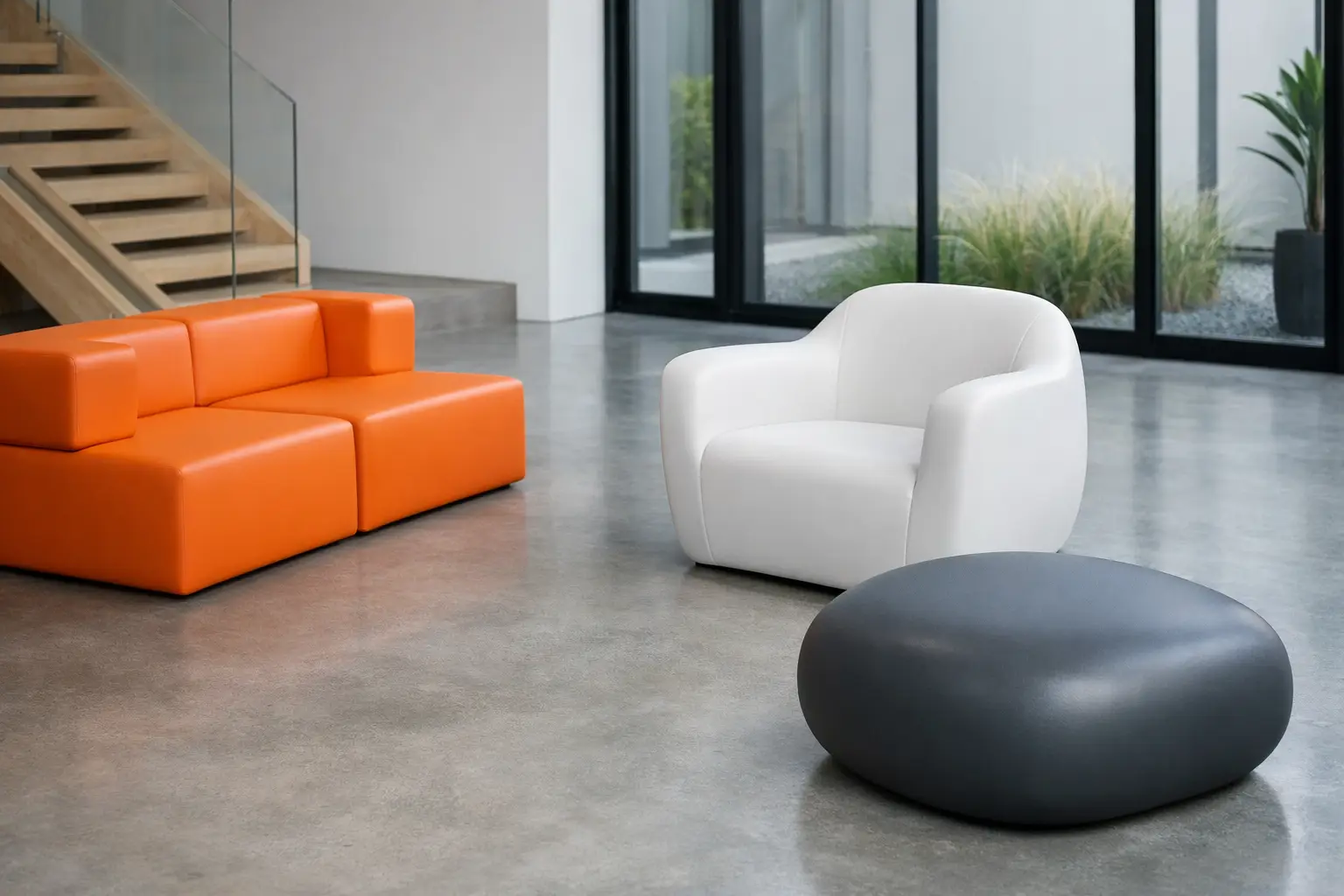
A dramatic seating concept can lose its edge fast when the specification is vague. The profile may look right in a rendering, but if the material performance, edge definition, coating type, and installation context are not resolved early, the built result can drift away from the original intent. That is exactly why knowing how to specify coated foam seating matters – especially for hospitality, retail, workplace, and public-space projects where form and function need to land at the same time.
Coated foam seating sits in a category of its own. It gives designers the freedom to work with sculptural geometry, soft volume, integrated forms, and saturated color in ways that traditional upholstery or hard-surface fabrication often cannot. But that freedom works best when it is paired with precision. A strong specification does not limit creativity. It protects it.
How to specify coated foam seating with the right starting point
The first step is not choosing a shape. It is defining the role the piece needs to play in the space. A lounge island in a hotel atrium, a playful seating element in a cultural venue, and a branded bench in a retail environment may all be made from coated foam, but they should not be specified the same way.
Start by identifying the use case in practical terms. Will people sit briefly, perch, lounge, or interact with the object as part of a social space? Is the seating freestanding, modular, built-in, or part of a larger architectural gesture? Will it be placed indoors, in a covered exterior setting, or fully exposed to weather? These are not side notes. They determine density, coating selection, shape refinement, seam strategy, and long-term performance.
This is also the stage to define the visual ambition of the piece. Coated foam works best when the object is conceived as a whole form rather than a conventional seat translated into a different material. Continuous curves, monolithic silhouettes, rounded transitions, integrated backs, and oversized sculptural volumes are all possible, but they require dimensional clarity from the start.
Form, comfort, and durability are connected
One common mistake is treating comfort and form as separate decisions. With coated foam seating, geometry is comfort. Seat height, pitch, radius, edge softness, and back angle all have a direct impact on how the object feels in use.
A low, expansive form can create a relaxed lounge posture, but it may not suit shorter dwell times or users who need easier entry and exit. Sharper profiles may look more architectural, yet excessive crispness can compromise comfort or create wear points. The best specification balances the visual language with the intended body position.
Durability enters the conversation at the same moment. High-traffic public seating needs a different internal build and surface strategy than a statement piece in a controlled interior. If users are likely to lean, drag bags, sit on edges, or move around the object from multiple sides, the design should accommodate that behavior. In coated foam, elegant simplicity often performs better than overly intricate detailing.
Material selection is where performance gets real
If you are working out how to specify coated foam seating for a commercial project, material performance needs to be explicit. Not assumed. Explicit.
The foam core, coating system, and final finish need to match the conditions of use. Interior applications may prioritize tactile quality, refined surface appearance, and saturated color consistency. Outdoor or semi-outdoor applications place more pressure on weather resistance, UV stability, moisture behavior, and cleaning demands. Public-facing projects may also require closer review of scratch resistance, impact tolerance, and maintenance cycles.
This is where a specialist fabrication partner matters. Coated foam is not a generic category with a one-size-fits-all spec. Different coating formulations and build methods produce different outcomes in flexibility, resilience, texture, and visual sharpness. If the design intent includes a very smooth monolithic surface, a heavily used lobby installation, or an unusual scale, those requirements should be discussed early rather than forced into a standard product logic.
Color should be specified with equal care. In coated foam, color is not just decorative. It is part of the object’s identity. Designers using bold hues, brand tones, or project-specific palettes should confirm how the selected finish behaves under lighting conditions, across large surfaces, and in relation to surrounding materials. Matte, satin, or textured effects can subtly shift the perception of volume and edge definition.
Dimensional clarity prevents expensive compromises
Concept sketches are useful, but coated foam seating needs disciplined dimensional information before production begins. Overall length, width, height, seat depth, seat height, and curvature need to be resolved as real spatial data, not just visual intent.
This matters even more with custom work. A form that feels perfectly proportioned in a rendering may become too bulky in a tight circulation zone or too low for comfortable use in a hospitality setting. Full-scale thinking is essential. If the piece is part of a larger composition, the surrounding clearances, access paths, and sightlines should be included in the specification process.
It is also worth considering how the object will read from all sides. Many coated foam pieces live in open plan environments where there is no back-of-house view. The spec should acknowledge 360-degree visibility, especially when the object acts as both seating and spatial landmark.
Detailing should support the illusion of effortlessness
The appeal of coated foam seating often comes from its clean, continuous appearance. That effect is highly dependent on detailing. Corners, transitions, underside treatment, floor contact, and joint logic all influence whether the final piece looks crisp and intentional or unresolved.
For specifiers, that means asking better questions. Does the design require hidden feet, a flush base, or direct floor contact? Should the bottom edge feel light and lifted, or grounded and monolithic? Are there practical reasons to break the form into modules for transport, installation, or maintenance? If so, how will those divisions be visually managed?
This is also the point where installation conditions need attention. Elevators, door widths, site access, and placement constraints can shape the final build strategy. The most sculptural seating object in the project is also often the least forgiving when access is tight. Modularization can solve that problem, but only if it is integrated into the design language rather than added as an afterthought.
Maintenance is part of the specification, not an aftercare note
Designers tend to focus on the object at handoff. Clients live with it for years. That gap matters.
Coated foam seating should be specified with a realistic view of cleaning, care, and wear. In a restaurant, airport lounge, educational environment, or public waiting area, maintenance teams need to know what the surface can handle and how it should be treated. A beautiful finish that requires unrealistic upkeep is not a strong specification.
This does not mean compromising the design. It means matching the finish to the operational reality. Smooth, non-porous coated surfaces can be practical in many settings, but expected contact levels, exposure, and cleaning protocols should be discussed in advance. If the piece is likely to be moved frequently, dragged across a floor, or exposed to heavy use, that should influence both detailing and protective strategies.
Custom specification works best as a collaboration
The most successful coated foam seating projects are rarely fully solved in isolation. They are developed through a tight exchange between design intent and fabrication expertise. That is especially true when the seating is highly sculptural, oversized, branded, or integrated into a broader architectural environment.
For ambitious projects, bring the manufacturer in while the form is still flexible enough to improve. A technically authoritative partner can help refine wall thickness perception, optimize comfort geometry, assess feasibility, and propose adjustments that preserve the concept while improving production outcomes. At Sixinch, that collaborative phase is often where a striking idea becomes a buildable object without losing its original force.
There is also value in knowing when not to over-specify. Some aspects need precision. Others benefit from material-led interpretation. If every line is locked too early without understanding how coated foam behaves in fabrication, the design can become harder to execute cleanly. The right balance is clear intent with informed flexibility.
What a strong specification should communicate
At minimum, the specification should define the intended use, dimensions, placement conditions, surface expectations, color direction, and performance requirements. It should also communicate the design priorities. Is the project driven by visual purity, tactile softness, outdoor resilience, heavy-duty public use, or branded impact? The answer changes the manufacturing path.
That is the real logic behind how to specify coated foam seating. You are not just ordering a seat. You are translating a design idea into an object that has to perform spatially, physically, and visually over time.
When the specification is done well, coated foam seating does something few materials can. It keeps the boldness of the concept intact while meeting the practical demands of real-world use. That is where great design stops being theoretical and starts shaping how people actually experience a space.