
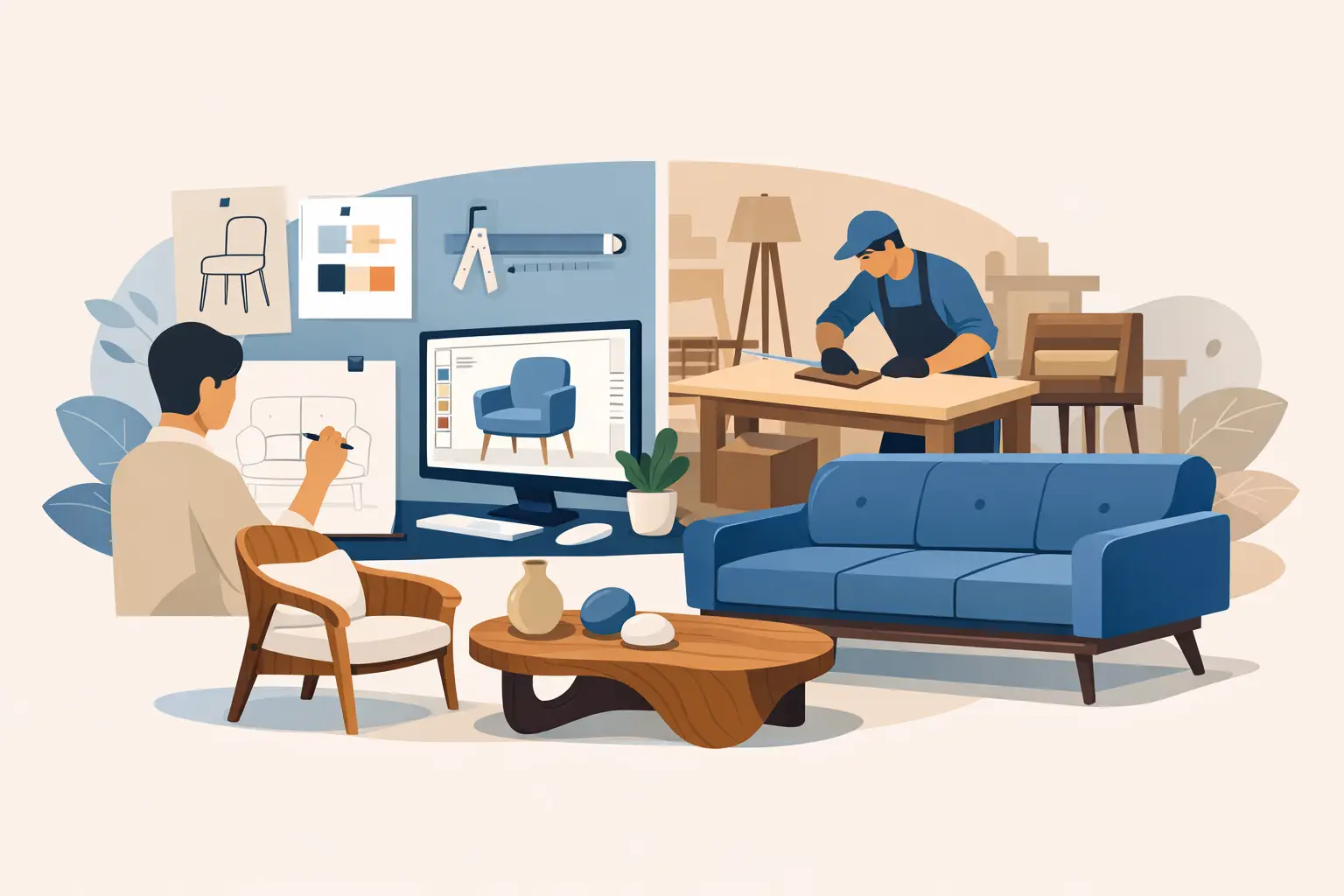
A curved banquette that follows an architectural line. A sculptural bench that doubles as a brand statement. A lounge piece in an exact color, finish, and scale because the space demands more than an off-the-shelf answer. That is where the question what is custom furniture design stops being theoretical and becomes highly practical.
Custom furniture design is the process of creating furniture around a specific concept, space, function, or identity rather than selecting a standard product from a catalog. Sometimes that means developing a completely original piece from sketch to production. Sometimes it means modifying an existing form, changing dimensions, refining ergonomics, adjusting materials, or matching a project palette with precision. In both cases, the goal is the same – to make the furniture serve the design intent, not force the design intent to serve the furniture.
For architects, interior designers, hospitality developers, and specifiers, that distinction matters. Standard furniture can solve common needs efficiently. Custom furniture is what you turn to when the project needs a stronger point of view, a better fit, or a form that simply does not exist yet.
What custom furniture design really means
At its best, custom furniture design is not decoration layered onto a basic product. It is problem-solving through form, material, and fabrication. The process begins with a design objective. That objective might be spatial, such as fitting seating into an irregular footprint. It might be experiential, such as creating a playful public installation or a high-impact hospitality lounge. It might be brand-led, where furniture becomes part of the visual language of a retail or workplace environment.
The word custom can cover a wide range. On one end, there are made-to-order adjustments – a different upholstery, a new length, a modified base, a project-specific finish. On the other end, there is full bespoke development, where geometry, structure, comfort, durability, and manufacturing method are all built around a new idea. Knowing where a project sits on that spectrum affects budget, lead time, engineering complexity, and risk.
That is why the strongest custom furniture projects are not driven by novelty alone. They are driven by clear intent. A dramatic piece still has to perform. A signature form still has to be manufacturable. And a visually minimal object still has to withstand how people actually use it.
What is custom furniture design in commercial projects?
In commercial and public environments, custom furniture design is often less about personal taste and more about alignment. The furniture must align with architecture, circulation, brand identity, code considerations, maintenance expectations, and heavy-use performance.
A hotel lobby, for example, may need seating that anchors the room visually while handling constant traffic. A workplace might need collaborative furniture that softens acoustics and defines zones without building walls. A retail environment may want product display, seating, and sculptural presence combined in one object. In each case, the furniture is doing more than filling space. It is shaping behavior and reinforcing atmosphere.
This is where custom fabrication becomes especially powerful. It allows designers to develop forms that follow the logic of the project instead of adapting the project to standard dimensions and typologies. Radius seating can trace a floor plan. Oversized elements can create identity. Integrated planters, benches, and architectural features can act as one continuous system.
That freedom, however, only works when paired with production expertise. Ambitious geometry needs a fabrication method that can hold the line between concept and durability.
The difference between custom, bespoke, and made-to-order
These terms are often used interchangeably, but they are not always the same in practice.
Made-to-order usually means a standard design produced with selectable options. You might choose from preset sizes, colors, or finishes. It offers some flexibility without changing the core product.
Custom furniture design usually means a standard design is being altered, or a new piece is being developed around project requirements. The level of change can be moderate or substantial.
Bespoke generally suggests a fully original solution created for one project or client. Every major decision, from geometry to detailing, is project-specific.
The distinction matters because expectations need to be aligned early. If a client says custom but expects a completely new typology for the price and speed of a catalog item, the process will break down quickly. Clear language helps teams scope correctly and preserve design quality.
How the process typically works
Custom furniture design starts with a brief, but not the vague kind. The useful brief defines how the piece should function, where it will live, who will use it, what visual role it should play, and what constraints are fixed. Dimensions, traffic conditions, indoor or outdoor use, maintenance demands, branding requirements, and timeline all shape the result.
From there, concept development translates intent into form. This can include sketches, reference imagery, CAD models, material studies, and early discussions about fabrication logic. The best manufacturers engage at this stage because technical insight can sharpen the design before time is lost on unbuildable ideas.
Next comes development. Dimensions are refined, materials are selected, structure is resolved, and details such as seams, coating, mounting, or installation methods are tested against reality. In design-led work, this stage is where many of the smartest decisions happen. A slight change in radius can improve comfort. A material adjustment can simplify maintenance. A hidden support strategy can preserve the clean visual language.
Then comes prototyping or sampling when needed. Not every project requires a full prototype, but for unusual forms, high-visibility pieces, or large production runs, validation is often worth it. It reduces surprises and gives stakeholders confidence before manufacturing begins.
Production is the final translation. This is where custom furniture succeeds or fails. A compelling rendering is not enough. The manufacturer must be able to reproduce the design consistently, at the required quality level, with the right finish and performance characteristics.
Material and fabrication shape what is possible
When people ask what is custom furniture design, they often think first about appearance. For specifiers, the more useful question is what fabrication method supports the appearance, the use case, and the project constraints at the same time.
Traditional woodworking, metalwork, upholstery, molded composites, stone, and coated foam all open different design possibilities. Each comes with advantages and trade-offs. Wood can bring warmth and craftsmanship, but very complex continuous forms may become expensive or technically awkward. Metal can create precision and strength, but it may not deliver the tactile softness needed for lounge settings. Upholstery offers comfort and familiarity, though maintenance and detailing vary widely depending on traffic and environment.
Specialized coated foam fabrication expands the conversation because it allows for sculptural geometry, soft-touch surfaces, monolithic forms, and strong visual clarity in ways standard furniture methods often do not. It is particularly effective when designers want volume, fluidity, integrated forms, or a highly distinctive silhouette without reducing the piece to a fragile concept object. For commercial interiors, public spaces, and branded environments, that combination of freedom and durability can be decisive.
Why designers choose custom instead of standard products
The obvious reason is originality, but that is only part of the story. Designers choose custom furniture when standard products compromise the project.
Sometimes the issue is fit. Standard modules leave awkward gaps, fight the architecture, or miss the scale of the room. Sometimes the issue is identity. A project needs furniture that supports a memorable brand experience rather than blending into the background. Sometimes the issue is integration. Seating, landscape elements, wayfinding, and spatial zoning need to work as one language.
There is also a strategic reason. In many high-concept environments, custom furniture carries disproportionate visual value. One strong custom element can define a lobby, activate a terrace, or make a public area instantly recognizable. That does not mean every piece in a project should be bespoke. It means targeted customization often creates more impact than filling an entire scheme with generic products.
The trade-offs are real
Custom furniture design brings more freedom, but it also asks for more discipline. Lead times are usually longer than buying from stock. Development requires decisions earlier. Cost can rise, especially if forms are highly complex or quantities are low. Revisions late in the process can be expensive.
There is also a design trade-off to manage. Pushing for a radical form without enough attention to ergonomics, maintenance, or installation can create a piece that photographs well and performs poorly. On the other hand, overcorrecting toward practicality can flatten the original concept. The best outcome sits in the tension between the two.
That is why partner selection matters. A strong fabrication partner does more than quote a drawing. They challenge weak assumptions, resolve technical friction, and protect the design where it counts.
What good custom furniture design looks like
Good custom furniture feels inevitable. It belongs to the space, supports its use, and communicates something distinct without looking forced. It resolves dimensions cleanly. It handles wear intelligently. It turns design ambition into something people can actually sit on, move around, and live with.
For professional specifiers, that is the real value. Custom furniture is not a luxury category separated from function. It is a design tool for projects that need more precision, more identity, or more formal freedom than standard products can offer.
When the right concept meets the right manufacturing method, custom furniture stops being an exception to the project. It becomes the piece that makes the project make sense. That is the point where custom design earns its place – not because it is different, but because it is exactly right.
1 comment