
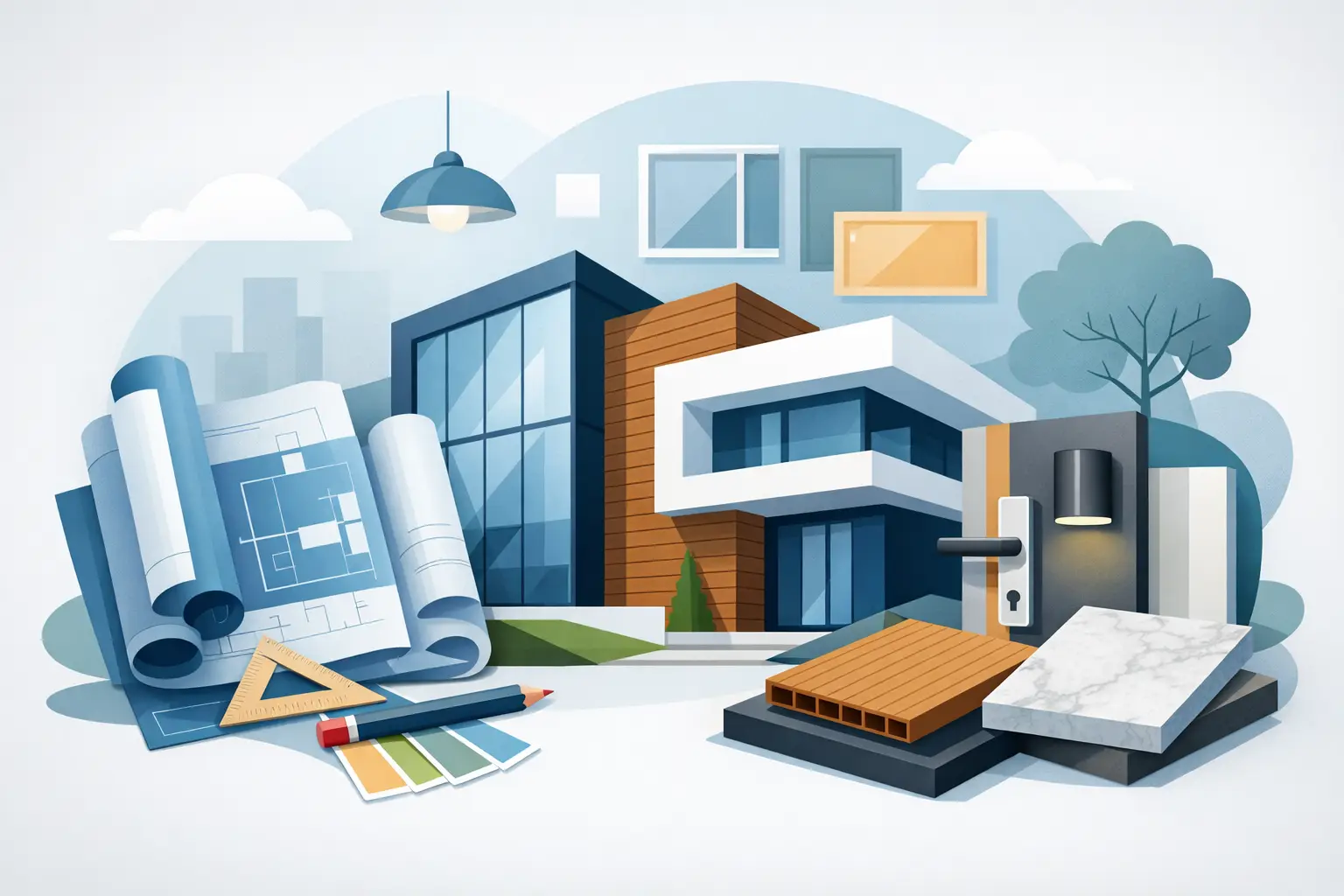
A reception bench that anchors a lobby, a sculptural planter that defines circulation, an upholstered wall element that softens acoustics, a custom seat that carries a brand’s identity – these are often discussed as furniture, fixtures, or finishes. But for architects and designers, the more useful question is often broader: what is architectural products, and where does that category begin and end?
Architectural products are manufactured elements used to shape, support, and complete built environments. They sit between pure construction materials and standalone decor. In practice, that can include wall features, integrated seating, planters, partitions, acoustic forms, outdoor site elements, and other designed objects that influence how a space performs and how it is experienced. The category matters because many of the most memorable spaces are not defined by structure alone. They are defined by the products that give structure a public face.
What is architectural products in design practice?
The phrase can sound vague because it covers a wide range of specification decisions. In design practice, architectural products are the physical components selected to help a space function, communicate, and endure. Some are technical and nearly invisible. Others are highly expressive and become the visual center of the project.
That range is exactly why the term is useful. It recognizes that not every meaningful design element is a floor finish, a paint system, or a loose piece of furniture. Some products operate more like spatial tools. They guide movement, create zones, improve comfort, reinforce a concept, or turn a blank shell into a place with identity.
For a hospitality lounge, that might mean modular seating that behaves like architecture by shaping circulation and gathering. In a workplace, it could mean acoustic furniture or soft dividers that create privacy without building permanent walls. In public space, it might include benches, landscape forms, or planters that organize how people occupy an area. These products do more than fill space. They actively construct the user experience.
Where architectural products sit between architecture and furniture
This is where the category gets interesting. Some architectural products are fixed in place. Some are movable. Some are specified early with the envelope and finishes. Others come later but still carry architectural weight.
That overlap is not a flaw in the definition. It reflects how contemporary spaces are actually delivered. Designers are increasingly asked to create environments that are flexible, branded, and emotionally distinct. Standard casework and commodity furniture rarely solve that on their own. Architectural products often bridge the gap by combining the utility of a building component with the visual presence of a designed object.
Think about a custom banquette in a retail environment. It may read as furniture, but it also directs traffic, supports dwell time, and becomes part of the store architecture. A group of oversized coated foam forms in a lobby may function as seating, but they can also define waiting zones, absorb sound, and establish the project’s visual language in one move. The object category matters less than the design role.
Common types of architectural products
Architectural products can include a broad mix of interior and exterior elements, depending on the project type. In commercial interiors, the category often includes integrated seating, benches, modular lounge systems, room dividers, wall panels, acoustic elements, planters, display forms, and branded installations. In exterior settings, it may extend to landscape seating, site furniture, sculptural barriers, and weather-resistant forms that shape public use.
Some products are primarily functional. Others are meant to create visual drama. The strongest ones do both. A well-designed product should solve a practical requirement while contributing to the overall architecture rather than competing with it.
This is also why material choice matters so much. The same formal idea can feel light, monolithic, playful, restrained, soft, or civic depending on how it is fabricated. Materials influence maintenance, longevity, tactile experience, and the level of formal freedom available to the designer.
Why architects and designers specify them
Architectural products earn their place when they do more than a standard solution can do. That usually comes down to four things: performance, identity, adaptability, and impact.
Performance is the most obvious. A product may improve seating comfort, define circulation, reduce noise, or withstand heavy public use. Identity is equally important in design-led work. Products can carry a brand language, reinforce a concept, or make a space instantly recognizable.
Adaptability is where custom fabrication becomes especially valuable. Not every project fits the dimensions, forms, or finish options of off-the-shelf products. Designers often need a specific radius, an unusual footprint, integrated power, a custom color, or a form that responds to architecture already in place. Architectural products make those moves possible without forcing the project back into a generic catalog solution.
Then there is impact. Bold environments are rarely built from timid components. When a project calls for sculptural seating, oversized forms, or objects that blur the line between furniture and architecture, the product itself becomes part of the storytelling.
What makes a product architectural rather than just decorative
A decorative object may add visual interest. An architectural product changes how a space works or how people move through it.
That distinction is useful when evaluating options. If a piece only fills an empty corner, it is probably decor. If it creates a threshold, frames a zone, improves usability, supports interaction, or becomes essential to the spatial composition, it is behaving architecturally.
This does not mean the product has to be fixed or structural. It means it has consequence. A freestanding modular seating landscape can be architectural because it organizes a lobby more effectively than partition walls. A soft sculptural element can be architectural because it introduces comfort, acoustic value, and circulation logic in one gesture.
For many contemporary interiors, this kind of hybrid thinking is the real advantage. It allows spaces to stay open, expressive, and adaptable while still feeling intentional.
The role of customization in architectural products
If you work in hospitality, workplace, retail, education, or civic design, you already know that unusual briefs are common. Tight footprints, branded environments, code considerations, intense wear, and the demand for originality all show up at once. That is why customization is not a luxury in this category. Often, it is the specification logic.
Custom architectural products allow designers to control geometry, scale, finish, and function at a much finer level. That might mean producing a continuous seating element that wraps a column, a cluster of planters that doubles as space division, or a lounge form that uses color and volume as part of the architectural concept.
The trade-off is that custom work requires real manufacturing expertise. Complex forms still need to be buildable, durable, and maintainable. Material behavior, coating systems, detailing, and tolerances all matter. Creative freedom only works when fabrication can support it with precision.
That is where design-driven manufacturers bring value. Sixinch, for example, works in a space where furniture and architectural product categories often overlap, using coated foam fabrication to produce forms that are difficult to achieve through conventional methods. For designers, that opens up a different level of formal expression without giving up practical performance.
How to evaluate architectural products for a project
The first question is not style. It is role. What does the product need to do in the space? Support waiting, create privacy, improve acoustics, define movement, strengthen branding, or handle outdoor exposure? Once that is clear, form becomes easier to judge.
Then look at material suitability. A product specified for a public atrium has different demands than one for a private lounge. Surface durability, cleanability, UV resistance, repairability, and comfort all affect long-term success. A visually ambitious piece that cannot handle actual use will create problems fast.
It also helps to think in terms of system behavior, not isolated objects. Will the product stand alone, repeat across the project, or connect with other elements? Can it adapt to site conditions? Does it support the architectural language already in play?
Finally, evaluate the manufacturer as carefully as the design. For architectural products, execution is part of the design. The ability to translate sketches, models, or concept visuals into production-ready outcomes is often what separates a striking built result from a compromised one.
Why the category keeps growing
The built environment has become more experiential, more flexible, and more brand-conscious. Clients want spaces that people remember. Designers want elements that do more than solve one problem at a time. That is expanding the role of architectural products across interiors, outdoor settings, and public-facing environments.
So, what is architectural products really about? It is about the designed pieces that give a space its working character – not just how it looks, but how it gathers people, directs movement, supports use, and expresses intent. When specified well, these products do not sit on top of architecture. They become part of it.
The most compelling spaces rarely rely on standard categories alone. They come together through elements that are technically sound, visually sharp, and confident enough to shape experience in a lasting way.