
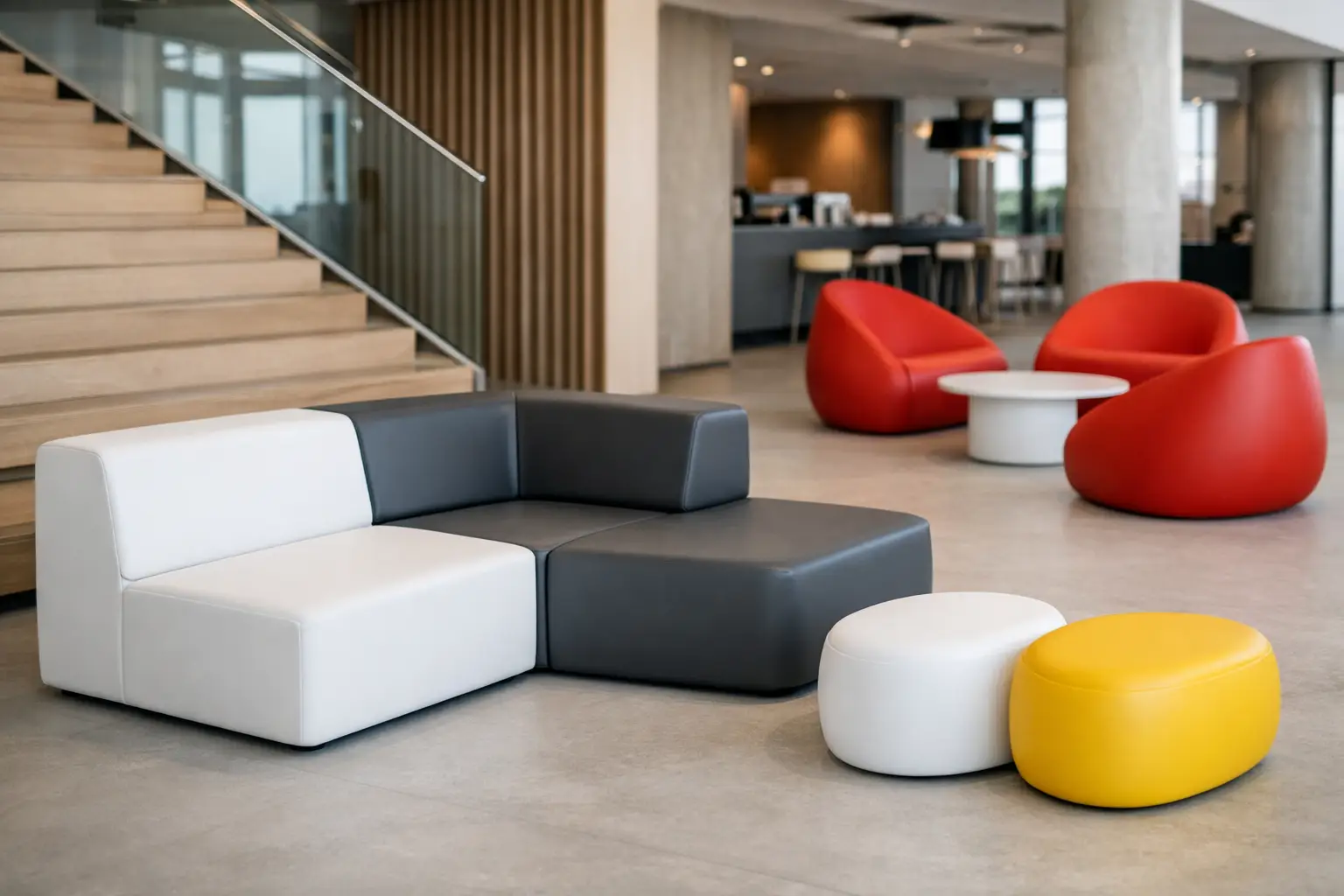
A lobby seat can look exceptional on install day and still fail the project six months later. The usual problem is not the concept. It is the gap between visual ambition and real-world performance. Specifying furniture for high traffic spaces demands more than a strong silhouette or a pleasing finish. It requires a clear read on how people move, pause, lean, spill, drag, clean, and return.
For architects, interior designers, and specifiers, that changes the conversation early. A piece in a hotel arrival zone, student commons, museum foyer, workplace social hub, or retail waiting area is not simply selected. It is engineered into the experience. The best results come from treating furniture as part of the architecture of use, not as a decorative layer added at the end.
What specifying furniture for high traffic really means
High traffic is not just about volume. It is about repetition, unpredictability, and the type of contact a piece receives all day. A lounge bench in a public atrium may see constant short-term use, while a hospitality banquette may face long dwell times, food spills, luggage impact, and repeated cleaning. Both are high traffic, but they fail in different ways.
That is why a useful specification starts with behavior. Who is using the piece? How long do they stay? Are they sitting upright, perching, reclining, or using furniture as an informal work surface? Will bags scrape the sides? Will children climb on it? Will staff move it daily? In public and commercial environments, furniture is often treated harder than anyone admits during concept development.
Design intent still matters, of course. In many branded or experiential spaces, the furniture is expected to carry identity, create atmosphere, and deliver a memorable visual gesture. But dramatic form only succeeds when the technical decisions underneath it support the traffic level. Otherwise the project trades impact for short lifecycle performance.
Start with the pattern of use, not the product type
Specifiers often begin with categories like sofa, bench, pouf, or planter seating. That is understandable, but it can lead to generic decisions. A stronger route is to map the behavior of the zone first and let that shape the furniture brief.
An airport lounge, for example, needs surfaces and forms that tolerate constant rotation of users and baggage contact. A university commons may need modularity, easy repositioning, and forgiving shapes that support multiple postures. A retail environment may need furniture that is visually striking enough to anchor a brand moment, yet stable and easy to maintain through heavy daily contact.
This is where custom manufacturing becomes especially valuable. Standard furniture often asks the project to adapt to the product. A design-led fabrication partner can adjust dimensions, radii, coating systems, color strategy, and detailing to fit the exact demands of the site. For ambitious interiors, that flexibility is not a luxury. It is often what keeps the project coherent.
Material choices decide more than durability
When people talk about furniture for heavy use, the conversation often narrows to toughness alone. That is too limited. Material choice also affects comfort, maintenance routines, acoustic character, hygiene, visual consistency over time, and how precisely a design can be executed.
In high traffic settings, upholstery can work beautifully, but it comes with clear maintenance implications. Seams, wrinkles, absorbency, and wear patterns all need honest evaluation. Hard materials can offer strong durability, yet they may feel too cold, too loud, or too inflexible for the intended atmosphere. Coated foam sits in a different category, especially when the brief calls for sculptural geometry, soft tactility, and easier wipe-clean maintenance without giving up visual impact.
The real question is not which material is best in the abstract. It is which material best supports the use case, the cleaning regime, and the design language at the same time. A monolithic bench with a continuous coated finish may outperform a more conventional upholstered option in a public setting because it removes some of the usual weak points while preserving comfort and form freedom. In another project, a mixed-material approach may be the better answer.
Form matters in high traffic more than most specs suggest
Sharp corners chip faster. Thin edges look elegant in renderings but often age poorly in busy environments. Deep tufting can collect debris. Delicate legs create visual lightness but may introduce instability or maintenance issues. In high traffic, geometry is not a purely aesthetic decision. It directly affects longevity.
This does not mean bold design has to become timid. It means form should be developed with use in mind. Generous radii, stable volumes, integrated bases, and continuous surfaces generally hold up better. Sculptural pieces can still make a strong statement, but the statement should be built on forms that welcome contact rather than suffer from it.
There is also a practical advantage to this approach. Furniture with clean, intentional geometry is often easier to clean, easier to move around, and easier to keep looking consistent across a long installation period. In commercial spaces, that consistency matters. A feature seat that ages unevenly can undermine the whole environment.
How to approach specifying furniture for high traffic zones
The most effective specifications are detailed without becoming rigid. They identify what the furniture needs to do, how it should feel, and how it will be cared for after handover.
Start by defining the environment precisely. Indoor and outdoor conditions are obviously different, but even within interiors there are major performance shifts between a climate-controlled executive lounge and an entrance zone exposed to wet coats, grit, and temperature swings from automatic doors.
Then clarify maintenance realities. A piece may be technically durable, but if it requires delicate care in a facility with fast turnaround cleaning, it is the wrong choice. Cleaning methods, chemical exposure, stain risk, and expected response times all belong in the conversation early.
It also helps to specify against likely abuse, not ideal use. In a public setting, someone will stand on the bench, push two seats together, drag the piece across the floor, or spill something staining. If the project cannot tolerate that possibility, the furniture is under-specified.
Finally, work through dimensions and ergonomics in context. Overscaled statement pieces can be compelling, but they still need to support real use. Seat heights, depths, and back angles should reflect who the audience is and how long they are likely to occupy the furniture. Visual drama should not force awkward comfort.
Key performance questions to resolve
Before final sign-off, the specification should answer a few hard questions. How will the piece be cleaned every day? What happens at the points of repeated contact? Does the form hide damage or expose it? Can the finish maintain color consistency over time? Is the piece stable enough for public use without losing its visual clarity?
These are not minor technicalities. They are the details that determine whether a design object keeps working once the photography is done.
Customization is often the difference between adequate and exceptional
High traffic spaces rarely benefit from generic furniture dropped into place. The circulation paths are specific. The brand language is specific. The user behavior is specific. So the furniture should be specific too.
Customization can improve performance in subtle ways. A modified seat height may better suit a hospitality concept. A particular coating choice may improve cleanability. A slightly adjusted footprint may reduce awkward gaps and discourage misuse. Color can also be specified strategically, not just decoratively. In some environments, saturated tones and integral finishes help the furniture maintain presence despite heavy use. In others, a more restrained palette supports longevity by making wear less visible.
This is where a manufacturer with material knowledge and fabrication control becomes a genuine design partner. The value is not simply in producing a custom shape. It is in translating creative intent into an object that can survive actual use.
The trade-off no one should ignore
Every high traffic furniture decision is a balance. The softest seating may invite longer dwell times but demand more maintenance. The most minimal geometry may photograph beautifully but show wear faster. Highly customized pieces create identity and spatial cohesion, yet they require early coordination and clear technical decisions.
That balance is not a problem. It is the work. Strong specification does not chase a perfect material or a universal product type. It aligns form, finish, behavior, maintenance, and brand expression so the furniture earns its place over time.
For design-led public and commercial spaces, that is the real goal. Not furniture that merely survives traffic, but furniture that keeps delivering the intended experience under pressure. When performance and expression are developed together, high traffic stops being a threat to the concept and becomes proof that the concept was built well.
4 comments