
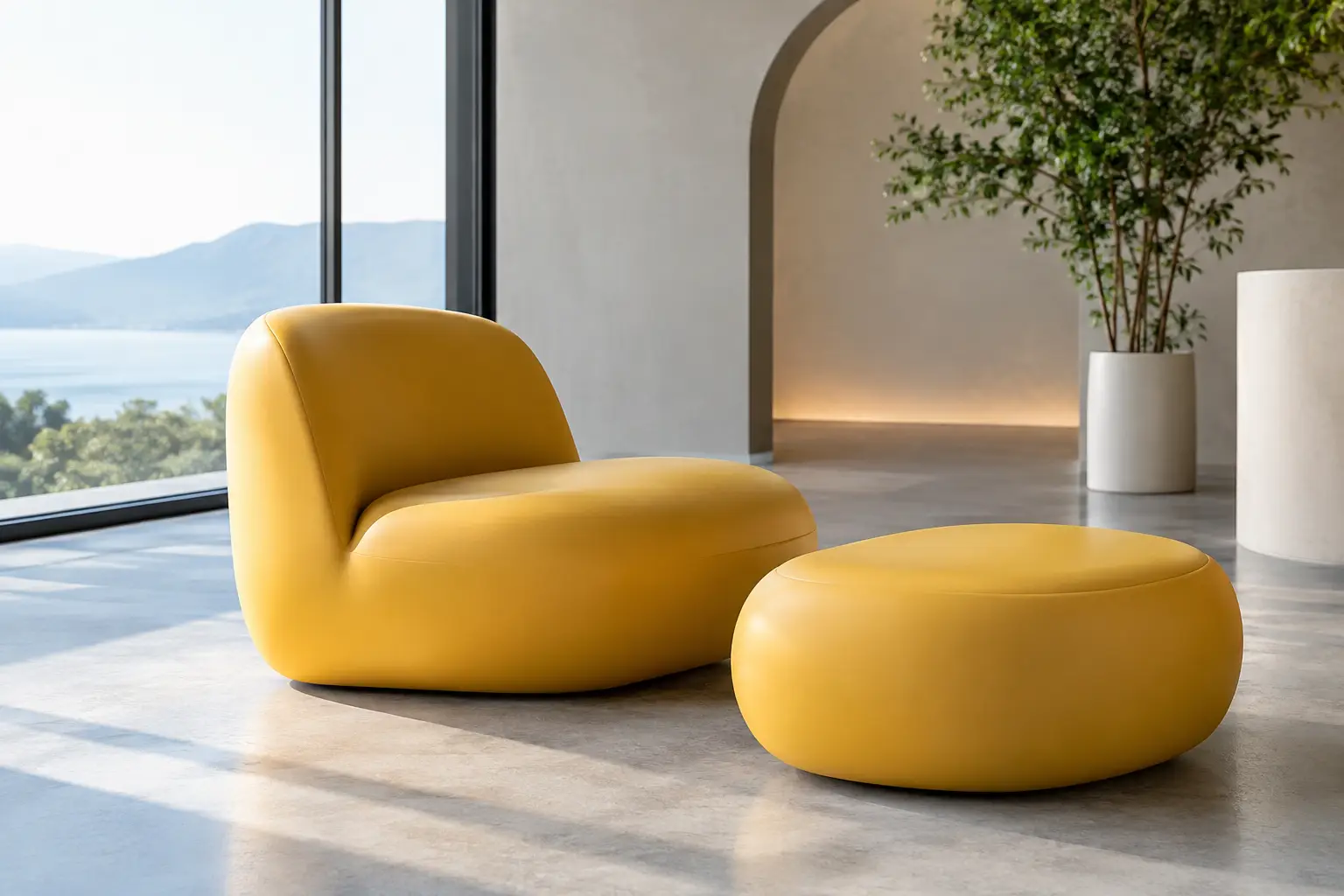
A sculptural bench in a hotel lobby cannot look tired after its first busy season. Neither can a branded lounge installation lose its visual precision under constant use. Foam furniture durability is therefore not a question of whether foam is inherently durable. It is a question of how the foam, structure, coating, geometry, and intended environment are engineered to work as one.
For architects and designers, this distinction creates real freedom. Foam can produce rounded silhouettes, monolithic forms, exaggerated proportions, and integrated seating details that conventional upholstered construction may resist. But specifying it well means looking beyond the shape. The finish, density, support strategy, traffic level, and maintenance plan all influence how an object will perform over time.
What Foam Furniture Durability Actually Means
Durability is often reduced to a simple measure: will the seat keep its shape? Shape retention matters, but it is only one part of the specification. In commercial interiors and public-facing environments, a durable foam furniture piece must also preserve its surface quality, remain stable under repeated loading, tolerate appropriate cleaning, and continue to look intentional as people interact with it.
A low lounge piece in a private residence and a reception bench in a high-traffic workplace may share a similar visual language, yet they face very different demands. The first may need a soft, relaxed feel. The second may need greater resistance to repeated compression, bags dragged across the surface, frequent cleaning, and varied user behavior. There is no universal foam specification that suits every project.
The strongest outcomes begin with a performance brief. Define where the piece will live, who will use it, how often it will be used, what kinds of contamination are likely, and whether the furniture is expected to be moved, stacked, or fixed in place. These details should shape material decisions before a silhouette is finalized.
The Material System Behind Lasting Performance
Foam furniture is not a single material category. Its performance comes from a layered system of components and fabrication choices.
Foam density and compression behavior
Higher-density foam generally offers better resistance to repeated compression than lighter foam, particularly in frequently used seating. Density alone is not a complete predictor of comfort or lifespan, however. The foam must also be selected for the load it will carry and the desired sit. A reception seat designed for short stays can feel firmer than a hospitality lounge sofa intended for longer dwell times.
Compression set is another useful consideration. This describes how much a foam material remains compressed after a sustained load is removed. Lower residual deformation supports a cleaner, more consistent form over time. For highly sculptural pieces, this is especially valuable because even subtle distortion can change the intended profile.
Internal support and scale
Not every foam object needs the same internal construction. Smaller poufs and low-volume forms may perform beautifully with carefully selected foam alone. Larger benches, long spans, deep seating, and pieces that must carry concentrated loads may benefit from an internal support strategy.
A frame or reinforced core can improve stability and manage deflection across larger dimensions. It can also help preserve crisp transitions where a design combines broad planes with tight radii. The trade-off is that additional structure affects weight, transport, installation, and production complexity. These are worthwhile considerations when the project requires large-scale visual impact without sacrificing reliable use.
Coating as a performance layer
A specialized coating changes the conversation around foam furniture durability. Rather than relying on a loose textile cover, coated foam can create a continuous skin around a form. The result is a highly graphic, tactile surface that supports visual clarity across curves, edges, and unconventional geometries.
The coating also acts as a protective layer, but its performance must be matched to the application. Surface texture, coating thickness, flexibility, color, and cleaning requirements all matter. A smooth finish may make a dramatic statement in a gallery-like lobby, while a more textured surface can be appropriate where a softer visual character or added surface forgiveness is desired.
Coatings are designed to flex with the foam beneath them. Still, material movement has limits. Extremely sharp edges, abrupt thin sections, or forms exposed to repeated impact require careful design development. Good fabrication is not simply about applying a finish to a concept. It is about refining the concept so the material can perform convincingly for years.
Specify for the Actual Environment
The most durable choice is not always the hardest or most rigid one. It is the one calibrated to the setting.
For hospitality lounges, consider the expected turnover, food and beverage exposure, cleaning routines, and whether guests are likely to sit on arms or edges. For retail environments, think about high visual scrutiny, frequent repositioning, and potential contact with bags, carts, or fixtures. In educational and public settings, resistance to heavy use and practical maintenance will often lead the specification.
Outdoor and semi-outdoor applications add another layer of decision-making. Sun exposure, standing water, temperature fluctuation, drainage, and surface heat all affect long-term behavior. An exterior piece should be designed as an exterior piece from the beginning, not treated as an indoor object placed outdoors. Material selection and detailing must account for the conditions it will actually face.
Color deserves the same practical attention. Deep and saturated colors create powerful spatial moments, but their suitability depends on the coating system, lighting conditions, cleaning methods, and exposure level. A design team should evaluate samples in the intended setting, especially where direct sunlight, artificial light, or intense visual contrast will shape the perceived finish.
Design Details That Protect the Form
The most successful foam furniture projects balance expressive form with intelligent restraint. Generous radii can distribute pressure more effectively than knife-sharp edges. Thoughtful proportions can discourage people from standing on a low table or using an armrest as a seat. A stable footprint reduces rocking and minimizes stress at the base.
Placement also affects longevity. Avoid locating a freestanding piece where it will constantly collide with door swings, service carts, or circulation bottlenecks. In a busy café, a bold seating island may need adequate clearance not only for visual impact but also to prevent daily abrasion. In a workplace, movable elements should be selected with their handling frequency in mind.
For custom work, mockups and samples are valuable tools. They allow designers to review scale, firmness, finish, seams or transitions where applicable, and the behavior of the form under real use. A beautiful rendering can communicate intent; a physical sample reveals whether the proposed material expression is right for the project.
Maintenance Is Part of the Specification
Even high-performing furniture benefits from informed care. The practical advantage of coated foam is that many surfaces can be cleaned more directly than porous textile upholstery, but cleaning should always follow the finish-specific guidance supplied for the project.
Regular removal of dust and prompt attention to spills can prevent unnecessary buildup. Avoid aggressive abrasives, harsh solvents, and cleaning tools that may dull or damage the surface. Facilities teams should receive clear care instructions at handover, particularly in hospitality, healthcare-adjacent, retail, and public environments where multiple staff members may be responsible for maintenance.
It is equally useful to establish a realistic inspection routine. Check high-contact areas, bases, edges, and locations near entrances or service zones. Early attention to localized wear helps protect the overall presentation of the installation.
When Custom Fabrication Adds Value
Standard furniture is built around repeatable assumptions. Custom coated foam fabrication allows those assumptions to be reconsidered. A seating landscape can follow an architectural curve. A branded color can become a full-scale spatial gesture. A planter, bench, and divider can share one visual language rather than appearing as unrelated components.
That freedom is most valuable when fabrication expertise is involved early. Sixinch works with designers to translate ambitious concepts into production-ready pieces, considering scale, coating behavior, support requirements, installation, and long-term use alongside the visual idea. The goal is not to limit the concept. It is to give it a material logic that supports its future.
Durable design is rarely the result of choosing the toughest-looking material. It comes from making informed decisions about how people will touch, use, clean, and remember a piece. When foam, coating, and form are specified with that reality in mind, expressive furniture can remain just as compelling after years of use as it was on opening day.