
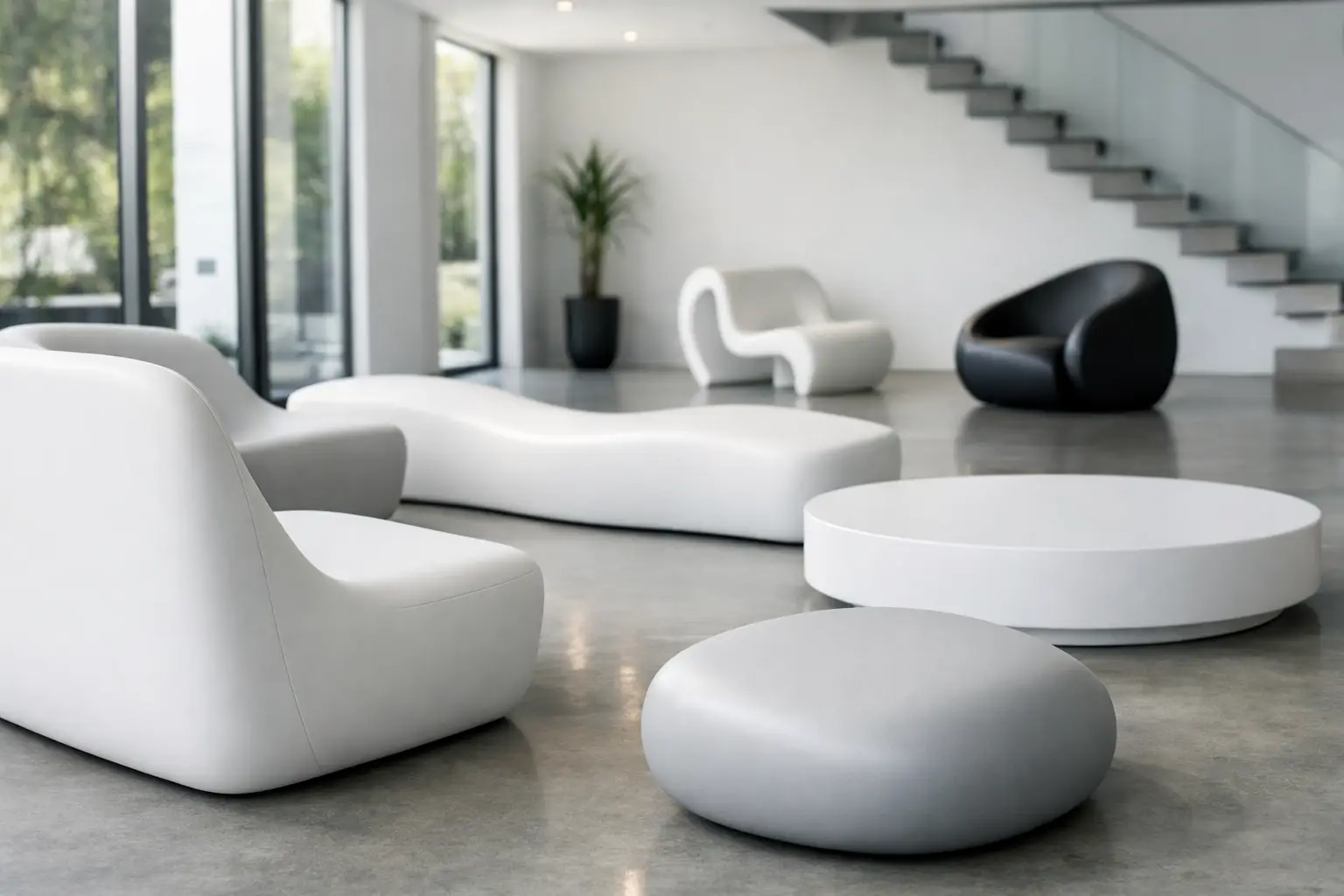
A visible seam can interrupt a strong concept faster than most material choices. When a bench, planter, lounge piece, or sculptural seat is meant to read as one continuous volume, joints, stitched edges, and panel breaks start to feel like compromise. That is where seamless furniture finish benefits become more than a visual preference. They shape how a piece is perceived, specified, maintained, and ultimately remembered within a space.
For architects, interior designers, and specifiers working on hospitality, retail, workplace, and public projects, finish quality is not a surface detail. It is part of the design language. A continuous coated finish changes the way furniture holds form, reflects light, receives color, and performs in high-traffic environments. It supports bolder geometry while reducing the visual noise that often comes with more conventional construction methods.
Why seamless furniture finish benefits matter in design-led spaces
In highly considered interiors, furniture is rarely asked to sit quietly in the background. It often defines circulation, softens architecture, reinforces brand identity, or creates moments of surprise. A finish without visible breaks helps these pieces read with greater confidence.
The first benefit is formal clarity. Curves feel cleaner, monolithic volumes feel more intentional, and custom shapes maintain their sculptural logic from every angle. This matters particularly when the design relies on soft geometry or exaggerated proportions. If the object is meant to feel carved rather than assembled, a continuous finish supports that reading.
The second benefit is visual calm. Commercial interiors are already layered with lighting, graphics, materials, and movement. Eliminating unnecessary lines from furniture simplifies the composition. The piece still makes an impact, but it does so with precision rather than clutter.
There is also a brand dimension to this. In experiential environments, a continuous finish can make seating and architectural elements feel more integrated with the identity of the space. The object looks developed, not improvised. That distinction is subtle, but clients notice it.
A cleaner silhouette changes how furniture is read
Designers often spend considerable time refining radius transitions, edge conditions, and proportions. Those decisions can lose force when interrupted by upholstery seams, laminated joins, or assembly lines that cut across the intended shape.
A seamless finish preserves the purity of the silhouette. It allows a bench to feel like one flowing gesture rather than a set of connected parts. It allows a planter to appear more architectural. It allows a custom lounge element to act as spatial sculpture even when it is fully functional and built for constant use.
This is especially valuable in open-plan spaces where furniture is seen from multiple viewpoints. A reception feature, breakout island, or retail seating element has to perform in the round. Continuous surfaces help maintain consistency across those sightlines.
That said, not every project needs this effect. In some interiors, visible joinery, stitching, or material transitions are part of the concept. If the design language leans tactile, crafted, or domestic, exposed construction can add warmth. But when the goal is clean impact, fluid form, and a more futuristic or branded expression, the advantage is clear.
The practical side of seamless furniture finish benefits
The visual argument is strong, but the practical value is what often secures specification approval. Furniture in public and commercial spaces has to endure daily contact, frequent cleaning, and hard use without quickly looking tired.
A continuous coated surface reduces places where dirt and debris can collect. There are fewer edges, folds, or stitched channels to trap dust, crumbs, moisture, or routine grime. In hospitality lounges, waiting areas, education spaces, and retail settings, that can make everyday upkeep more straightforward.
This does not mean every finish performs the same way. Performance still depends on coating quality, substrate integrity, traffic levels, and maintenance routines. But in general, fewer interruptions in the surface mean fewer maintenance weak points.
There is also an advantage in visual aging. Furniture with multiple joined materials may show wear inconsistently, with stress points becoming obvious at seams or transitions. A continuous finish can create a more uniform appearance over time, helping a piece retain its graphic strength longer in demanding environments.
For specifiers, this matters because durability is not only about surviving use. It is about continuing to look intentional after months or years in service.
Seamless furniture finish benefits and custom freedom
The biggest design opportunity may be flexibility. Traditional furniture construction often asks the concept to adapt to manufacturing limitations. Straight lines are easier. Repeatable modules are easier. Standard upholstery logic is easier. But many projects are not looking for easier. They are looking for distinctive forms that create identity.
A seamless finish opens the door to shapes that would be difficult or visually diluted in more conventional materials. Overscaled curves, rounded monoliths, integrated seating landscapes, playful branded forms, and topographies that blur the line between furniture and architectural feature all become more viable.
For custom projects, this freedom is not just aesthetic. It can solve planning challenges. A single sculptural seating element can guide movement through a lobby, define a zone in a large atrium, or soften a hard retail footprint without adding visual fragmentation. Because the finish supports continuous form, the object can do more with less formal interruption.
This is one reason coated foam fabrication has become so compelling for design teams that want geometry to stay intact from concept sketch to installed piece. At Sixinch, that relationship between bold form and controlled execution is central. The finish is not a decorative afterthought. It is part of what makes unconventional ideas buildable.
Color, light, and surface presence
Color behaves differently on a continuous surface. Without stitched panels or segmented construction, the hue reads more evenly across the volume. That can make saturated colors feel more confident and soft neutrals feel more refined.
Light also travels differently across uninterrupted curves. Highlights move smoothly, shadows stay clean, and the form feels more resolved. In dramatic interiors, this can increase the sculptural effect. In minimalist spaces, it can add depth without adding complexity.
For branded environments, this has obvious value. If a piece is carrying a signature color or acting as a focal object, the finish needs to support clarity. Panel breaks and seams can compete with that clarity. A continuous surface lets the form and color do the work.
Still, the right finish depends on the project intent. Matte and satin surfaces will communicate differently. Bright colors can amplify form, while softer tones can make larger pieces feel more architectural and less dominant. The finish creates opportunity, but specification choices still need to be disciplined.
Where this finish performs best
Some project types benefit more immediately than others. Hospitality spaces gain from furniture that feels distinctive yet easy to maintain. Retail environments benefit when fixtures and seating reinforce brand expression. Public interiors often need durable pieces that read clearly from a distance and hold up under constant use.
Landscape and transitional indoor-outdoor applications can also benefit, especially when the design calls for soft, rounded forms that conventional hard materials would make feel colder or more rigid. In workplace and education settings, continuous surfaces can help create inviting communal zones without introducing fussy detailing.
The key is alignment between form, use, and finish performance. If a project demands a highly textured, heritage, or hand-assembled look, another material expression may be more suitable. But if the goal is sculptural simplicity with serious everyday utility, this finish earns its place.
What designers should evaluate before specifying
Not every continuous finish is equal, and the smartest specifications look beyond appearance. Surface feel, cleanability, repair strategy, color consistency, and installation conditions all matter. So does scale. A small side piece and a large custom seating landscape present different fabrication and handling considerations.
It is also worth assessing how the object will be used. Will people climb on it, drag bags across it, or move it frequently? Is the project a high-touch hospitality setting or a controlled corporate interior? The more accurately those conditions are understood, the better the finish can be matched to the brief.
Designers should also think about perception. A continuous coated object can read playful, luxurious, futuristic, architectural, or branded depending on its geometry and color. The same technical approach can support very different design stories. That range is part of the appeal, but it demands clear intent.
The strongest projects do not use a seamless finish simply because it looks advanced. They use it because it sharpens the concept, improves the user experience, and supports long-term performance in a credible way.
When a piece needs to feel singular rather than assembled, the finish becomes part of the architecture of the idea. That is where the real value sits – not in novelty, but in the rare combination of visual precision, practical resilience, and genuine design freedom.