
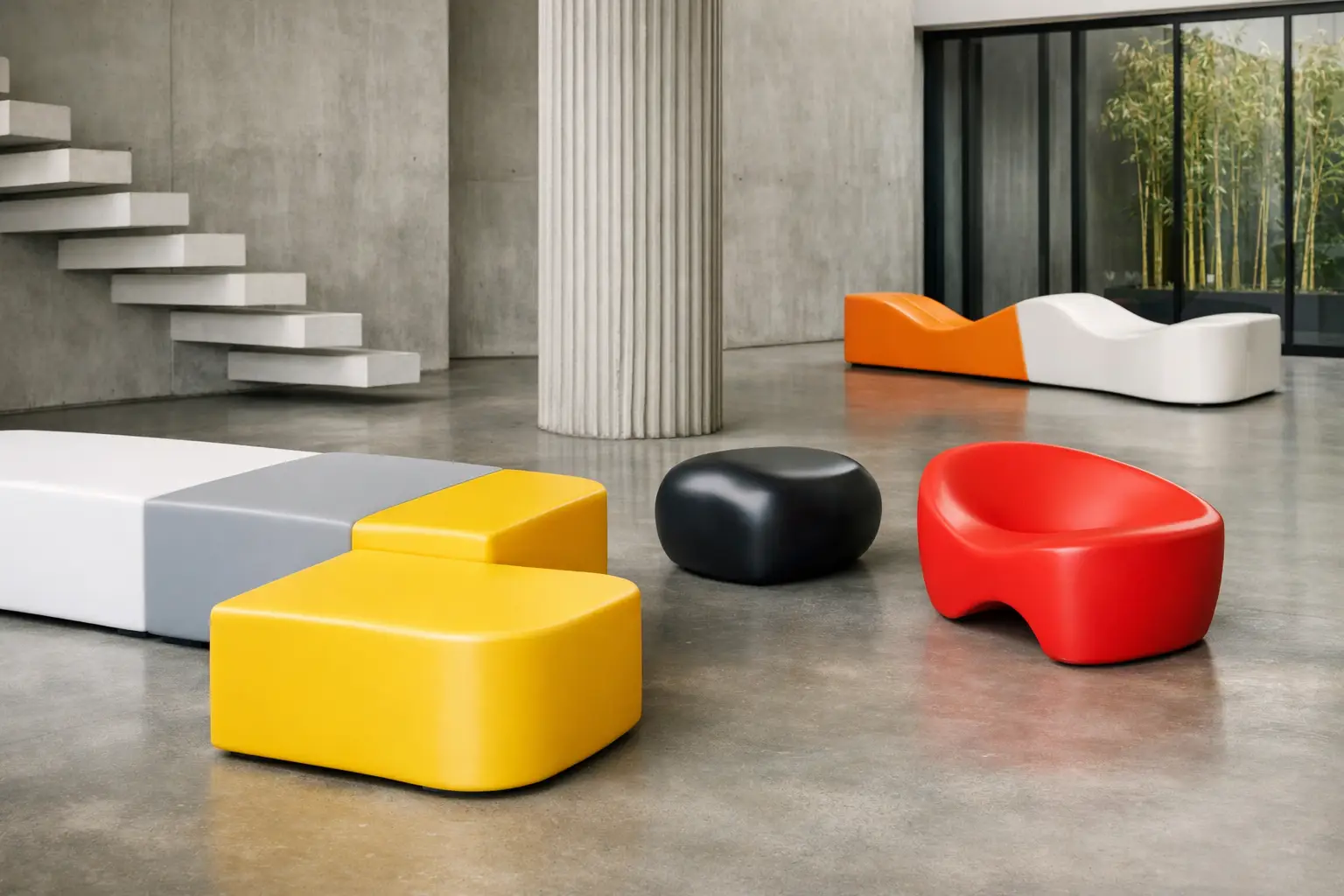
A reception lounge can communicate a brand before a guest reaches the desk. The silhouette of a sofa, the color of a bench, and the tactile quality of a seating island all shape that first impression. Branded interior furniture solutions turn those individual decisions into a physical identity – one that can carry through hospitality, retail, workplace, cultural, and public environments without defaulting to generic contract furniture.
For architects and designers, the challenge is not simply selecting pieces in a brand color. It is creating furniture that belongs to the space, supports the intended use, and can be manufactured with enough precision to retain the original idea. That calls for a different specification mindset: start with the experience and the form, then develop the material and performance requirements around them.
What Branded Interior Furniture Solutions Must Do
Brand expression and operational performance have to work together. A sculptural seat may establish a memorable visual language, but it also needs the right height, density, stability, cleanability, and scale for the people who will use it. In a hotel lobby, that can mean generous lounge forms that invite guests to settle in. In a retail environment, it may mean compact, high-visibility seating that supports circulation rather than obstructing it.
The strongest branded environments do not treat furniture as a decorative afterthought. Furniture can define zones in an open plan, soften acoustics, introduce color at human scale, and create a recognizable visual signature across multiple locations. A rounded bench can echo an architectural curve. A group of oversized poufs can translate a playful brand personality into an informal waiting area. Custom planters and landscape elements can carry the same geometry from inside to outside.
That continuity matters most when a project has a clear point of view. A brand built around calm restraint may need quiet tonal shifts and precise forms. A brand designed for energy, participation, or spectacle may call for saturated color, exaggerated volume, and furniture that functions as an installation as much as a seat. Neither approach is inherently better. The right answer depends on the audience, the dwell time, the maintenance plan, and how much visual intensity the architecture can carry.
Start With the Experience, Not the Product Category
A custom furniture brief becomes more useful when it describes behavior before it describes objects. Rather than asking for a bench, define whether people will wait for two minutes, socialize for an hour, work with a laptop, or gather around a presentation. Rather than requesting lounge seating in a particular color, establish the desired emotional effect, capacity, circulation pattern, and sightlines.
This early work prevents a common failure: furniture that photographs well but performs poorly in use. Deep, low seating can create an editorial look, yet it may not suit a space serving a broad range of guests. A soft, sculptural form can be ideal for a family zone or creative workplace, but a high-turnover café may need more upright support and clearly defined personal space.
Scale is equally important. An object that feels striking in a large render can become timid in a double-height atrium, while an oversized element can overwhelm a compact lounge. Reviewing plans, elevations, and circulation routes with furniture footprints in place is essential. So is considering how groups will approach, occupy, and move around each piece.
Give the Form a Job
The most convincing custom forms solve more than one problem. A curved seating element can guide traffic around a central feature. A modular island can create small social territories in a large open room. A backless pouf can serve as flexible seating, a casual perch, or a visual marker for a branded zone.
When form has a clear spatial role, it is easier to defend through value engineering. Decorative complexity without purpose is often the first feature to be removed under budget pressure. A distinctive form that organizes the room, supports capacity, or replaces several standard pieces has a much stronger case.
Material Choice Is Part of the Brand Message
Materials determine what a piece feels like, how it ages, and how clearly it can hold a design language. Coated foam fabrication offers particular freedom for branded interiors because it allows soft volumes, uninterrupted surfaces, rounded transitions, and highly customized geometry. It can make seating feel monolithic and architectural without relying on hard-edged construction.
The coating system also changes the specification conversation. Instead of limiting a project to standard upholstery options, designers can develop color, texture, finish, and form as one coordinated expression. That is particularly valuable for concepts with curves, compound shapes, or sculptural profiles that would be difficult to upholster cleanly.
Performance still needs to lead the material decision. High-contact seating requires a finish suited to repeated cleaning and wear. Projects with food, drinks, children, or frequent events should account for stain exposure and housekeeping routines from the beginning. Exterior-adjacent or landscape applications introduce additional questions around weather, drainage, UV exposure, and temperature change.
A visually continuous surface is compelling, but it does not eliminate the need for practical detailing. Consider where pieces meet the floor, how they can be moved for cleaning, and whether modules must be reconfigured over time. Color selection deserves the same discipline. Bright hues can create immediate impact, yet they may reveal marks more readily in some settings. Darker tones can be forgiving, but may absorb light in already dim interiors. Sampling under the actual project lighting is a small step with major consequences.
Build Customization Into the Specification Process
Customization is most productive when the project team identifies what must remain fixed and what can evolve. The brand-defining geometry, color family, and user experience may be non-negotiable. Dimensions, module breaks, internal construction, or finish details may offer room for adjustment as the design moves into production.
This is where a fabrication partner should be involved early. A preliminary sketch can establish intent, but it rarely answers the questions needed for repeatable production: What is the appropriate foam density? Where does the structure require reinforcement? How will modules join? What are the transport constraints? Can the form be fabricated as one object, or should it be divided for access and installation?
Early technical input is not a creative compromise. It protects the design from late revisions that weaken its proportions or visual clarity. At Sixinch, coated-foam expertise is used to translate ambitious concepts into production-ready furniture while preserving the character that made the concept worth pursuing.
Prototypes and finish samples are especially valuable for branded work. They allow the team to assess comfort, surface feel, color accuracy, seam or joint strategy, and the relationship between the piece and its surrounding materials. For a flagship space or a concept intended to roll out across locations, this review stage establishes a reliable reference point before larger production begins.
Plan for the Full Life of the Interior
A branded interior is rarely static. Hospitality spaces change layouts for events. Retail concepts evolve with seasonal campaigns. Workplace teams grow and reorganize. Furniture should support that reality where possible.
Modularity can be useful, but only when it serves the project. Individual modules make replacement and reconfiguration easier, yet too many visible divisions can interrupt a clean sculptural form. A fully integrated piece delivers stronger visual impact, though it may be harder to relocate or adapt later. The choice depends on the expected lifespan of the layout and the value placed on flexibility versus visual continuity.
Maintenance needs clear ownership. Specify approved cleaning practices, establish how damage will be reported, and keep records of the original color and finish. For multi-site programs, a controlled palette and defined specification standards help preserve the brand experience from one location to the next without making every interior identical.
The goal is not furniture that merely carries a logo or repeats a corporate color. It is furniture that gives a space its own posture, rhythm, and memory. When design intent, material behavior, and real-world use are considered together, branded interiors gain the confidence to be unmistakable – and the practical discipline to stay that way.